

Every year, enterprises across India and globally commit significant budgets to digital transformation programs, core system modernisations, and large-scale technology initiatives. Most of these programs start with optimism, clear business cases, and executive alignment.
Yet a disproportionate number fail to deliver on time, run over budget, or produce outcomes that fall short of expectations. The reasons are rarely technical. The real challenges lie in execution, governance, stakeholder management, and the difficult realities of operating at enterprise scale.
If you’ve been part of a multi-year transformation program, you already know this. The question isn’t whether complexity exists, it’s how you manage it.
Why Enterprise Programs Are Different
Enterprise-scale initiatives are fundamentally different from product development or startup projects. The stakes are higher, the interdependencies deeper, and the margin for error narrower.
Scale changes everything. When you’re deploying systems across multiple geographies, integrating with dozens of legacy platforms, and managing hundreds of stakeholders, small oversights compound quickly. A minor delay in one workstream can cascade across the program. A poorly managed vendor relationship can derail months of progress.
Risk is constant. Regulatory compliance, data security, business continuity these aren’t optional considerations. They’re embedded in every decision. And in India’s regulatory environment, which continues to evolve rapidly, staying compliant while maintaining delivery momentum requires constant vigilance.
The cost of failure is significant. When a core banking system migration fails, when an ERP rollout stalls, when a customer-facing platform underperforms the impact isn’t just financial. It affects customer trust, employee morale, competitive positioning, and in some cases, regulatory standing.
This is why predictability matters. Enterprises need programs that deliver what was promised, when it was promised, within the agreed parameters.
What Actually Goes Wrong
The reasons enterprise programs struggle are well documented, yet they continue to recur.
Unclear ownership and accountability. When a program spans multiple business units, IT teams, and external partners, responsibility can become diffuse. Everyone is involved, but no one truly owns the outcome. Decisions get delayed. Issues get escalated repeatedly without resolution. Progress stalls.
Governance theatre instead of real governance. Many programs have impressive governance structures, steering committees, program boards, and weekly status meetings. But governance is only valuable if it drives decisions and accountability. If your governance process produces extensive reports but doesn’t resolve blockers or address risks proactively, it’s ineffective.
Vendor management is treated as procurement, not partnership. Choosing a technology partner is often reduced to RFP processes and cost comparisons. But the partner who wins on price may not be the one equipped to navigate the complexities of your environment. Enterprise delivery requires vendors who understand your business context, regulatory requirements, and organisational culture, not just the technical specifications.
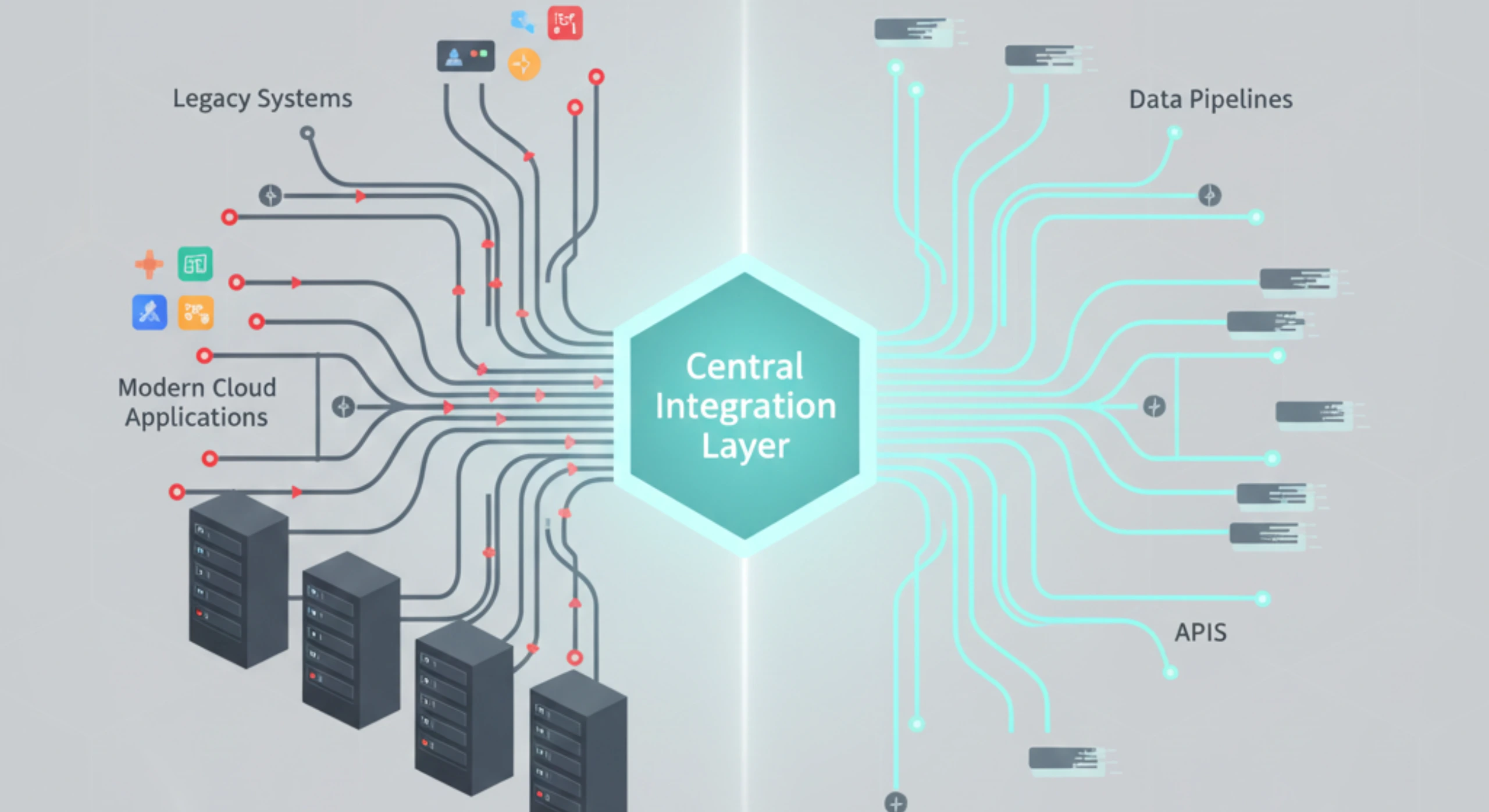
Underestimating integration complexity. Legacy systems are a reality in most enterprises. They weren’t built to be easily replaced or integrated. Data quality is inconsistent. Documentation is incomplete. Subject matter experts have moved on. Yet programs often assume integration will be straightforward. It rarely is.
Scope creep driven by stakeholder expectations. Business units have legitimate needs. Compliance requirements emerge mid-program. Market conditions shift. But without disciplined change control, scope expands quietly until timelines and budgets become unmanageable.
Insufficient focus on organisational readiness. Technology deployment is only one part of transformation. If end users aren’t trained properly, if processes aren’t redesigned, if change management is treated as an afterthought, adoption suffers. The best system in the world delivers no value if people don’t use it effectively.
These aren’t theoretical problems. They’re patterns that repeat across industries and geographies.
What Separates Success from Failure
Successful enterprise programs share common characteristics. They’re not immune to challenges, but they manage them differently.
Clear, empowered leadership. Someone needs to own the program end-to-end. Not just coordinate activities, but make tough calls, resolve conflicts, and ensure accountability. In the most successful programs, this leader has both technical credibility and business understanding, with direct access to executive decision-makers.
Realistic planning grounded in evidence. Optimism is necessary, but realism is essential. Programs that succeed build plans based on actual capacity, known constraints, and honest risk assessment. They include buffers for integration challenges, regulatory reviews, and organisational change. They plan for what will likely go wrong, not just what should go right.
Structured, decision-oriented governance. Effective governance isn’t about status updates. It’s about making decisions quickly, removing obstacles, and maintaining strategic alignment. Governance forums should have clear mandates, defined escalation paths, and the authority to act.
Rigorous delivery discipline. This means proper requirements management, structured testing approaches, clear release criteria, and disciplined change control. It means tracking progress honestly, identifying risks early, and addressing them before they become crises. It means treating quality and security as integral to delivery, not as gates to pass through.
The right kind of partnership. Not every technology partner is equipped for enterprise-scale delivery. The firms that succeed in this space understand that execution matters as much as technical capability. They bring program management rigour, industry-specific experience, and the ability to operate within complex stakeholder environments.
This is where partners like Ozrit become valuable not as vendors delivering to a specification, but as execution partners who understand the realities of enterprise delivery and bring the maturity to navigate them.
Investment in organisational change. Technology is an enabler, but transformation requires people to work differently. Successful programs invest in training, communication, and change management from the beginning. They involve end users early, address concerns proactively, and measure adoption as seriously as they measure technical milestones.
The Role of Executive Leadership
As a C-level executive, your involvement in enterprise programs isn’t about reviewing status reports. It’s about creating the conditions for success.
Set clear expectations and hold people accountable. Define what success looks like in specific, measurable terms. Ensure ownership is unambiguous. Don’t accept vague progress updates or recurring excuses.
Make governance work. Your steering committee should be a decision-making body, not a reporting forum. Empower it to resolve issues, allocate resources, and maintain momentum. If governance becomes bureaucratic, simplify it.
Invest in the right capabilities. Program leadership, business analysis, integration expertise, change management these aren’t optional. If you don’t have them internally, acquire them through partnerships. The cost of proper capability is always lower than the cost of program failure.
Question vendor selection criteria. The cheapest bid rarely delivers the best outcome. Evaluate partners on delivery track record, cultural fit, and ability to manage complexity not just technical capability and price.
Stay engaged, especially when things get difficult. Enterprise programs will face challenges. Executive visibility and support during difficult phases often make the difference between recovery and failure.
Choosing Partners Who Understand Execution
Technology partners fall into different categories. Some excel at innovation and product development. Others specialise in specific technical domains. But enterprise-scale delivery requires a particular kind of maturity.
You need partners who have managed multi-year programs, navigated complex stakeholder environments, and delivered under regulatory scrutiny. Partners who understand that predictable delivery requires discipline, governance, and accountability not just technical skill.
Partners who won’t overpromise during the sales process, but will be honest about risks, realistic about timelines, and committed to shared success.
This is the kind of partnership that companies like Ozrit are built to provide bringing both technical depth and program execution capability to enterprises facing complex transformation challenges.
Practical Steps Toward Predictable Delivery
If you’re embarking on a significant enterprise program, or trying to course-correct one that’s struggling, here are practical steps that make a difference:
Start with an honest assessment. Understand your current state thoroughly before committing to timelines and budgets. Map dependencies. Identify constraints. Acknowledge what you don’t know.
Build the right team. Program success depends on people. Invest in experienced leadership, ensure adequate capacity, and don’t underestimate the importance of business analysis and change management capabilities.
Establish decision-making clarity. Define who decides what, and ensure those people have the information and authority they need. Eliminate ambiguity about ownership and accountability.
Plan for integration from the beginning. Legacy systems, data quality, interface complexity address these in your plan, not as afterthoughts. Allocate time and budget accordingly.
Implement proper risk management. Identify risks early, assess them honestly, and manage them actively. Risk management isn’t about avoiding all risks, it’s about making informed choices about which risks to accept and which to mitigate.
Measure progress objectively. Track metrics that matter delivered functionality, quality indicators, user adoption, business outcomes. Don’t rely solely on activity-based reporting.
Communicate transparently. When issues arise, surface them quickly. When timelines need adjustment, communicate early. Trust is built through honest communication, not optimistic reporting.
The Long View
Enterprise transformation isn’t a one-time event. Digital capabilities need to evolve continuously. Systems require ongoing investment. Technology landscapes shift.
The goal isn’t just to deliver one program successfully. It’s to build organisational capability for sustained execution governance structures that work, delivery practices that scale, partnerships that endure, and cultures that balance ambition with discipline.
This takes time. It requires consistent investment. It demands leadership that values execution as much as strategy.
But enterprises that develop this capability gain significant competitive advantage. They can respond to market changes faster, adopt new technologies more effectively, and execute transformation initiatives with confidence.
Moving Forward
Predictable delivery in complex enterprise environments isn’t about perfection. Challenges will emerge. Adjustments will be necessary. But the difference between programs that succeed and those that struggle lies in how these challenges are managed.
It lies in clear ownership, realistic planning, disciplined execution, and the right partnerships.
If you’re leading enterprise-scale technology initiatives, these aren’t optional considerations. They’re the foundation of delivery success.
The question isn’t whether complexity exists in your environment. It’s whether you’re managing it with the rigour, maturity, and partnership that enterprise-scale delivery demands.