
Your phone broke last week. You ordered a replacement online. While waiting for delivery, you realize your old phone is still sitting in a drawer at home.
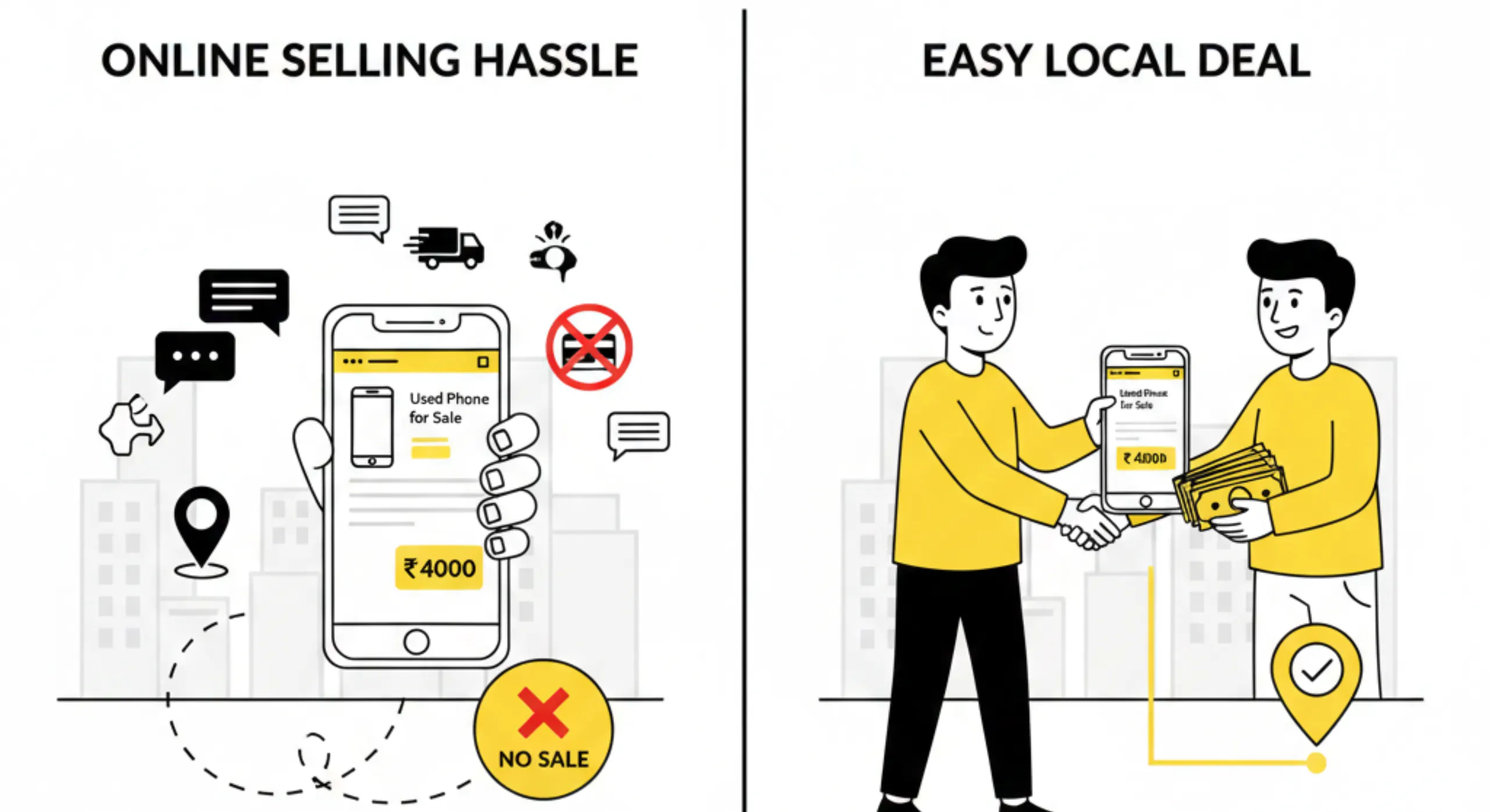
It’s a year old. Works fine. Someone could definitely use it. But listing it feels like a project. Taking photos. Writing descriptions. Dealing with shipping questions.
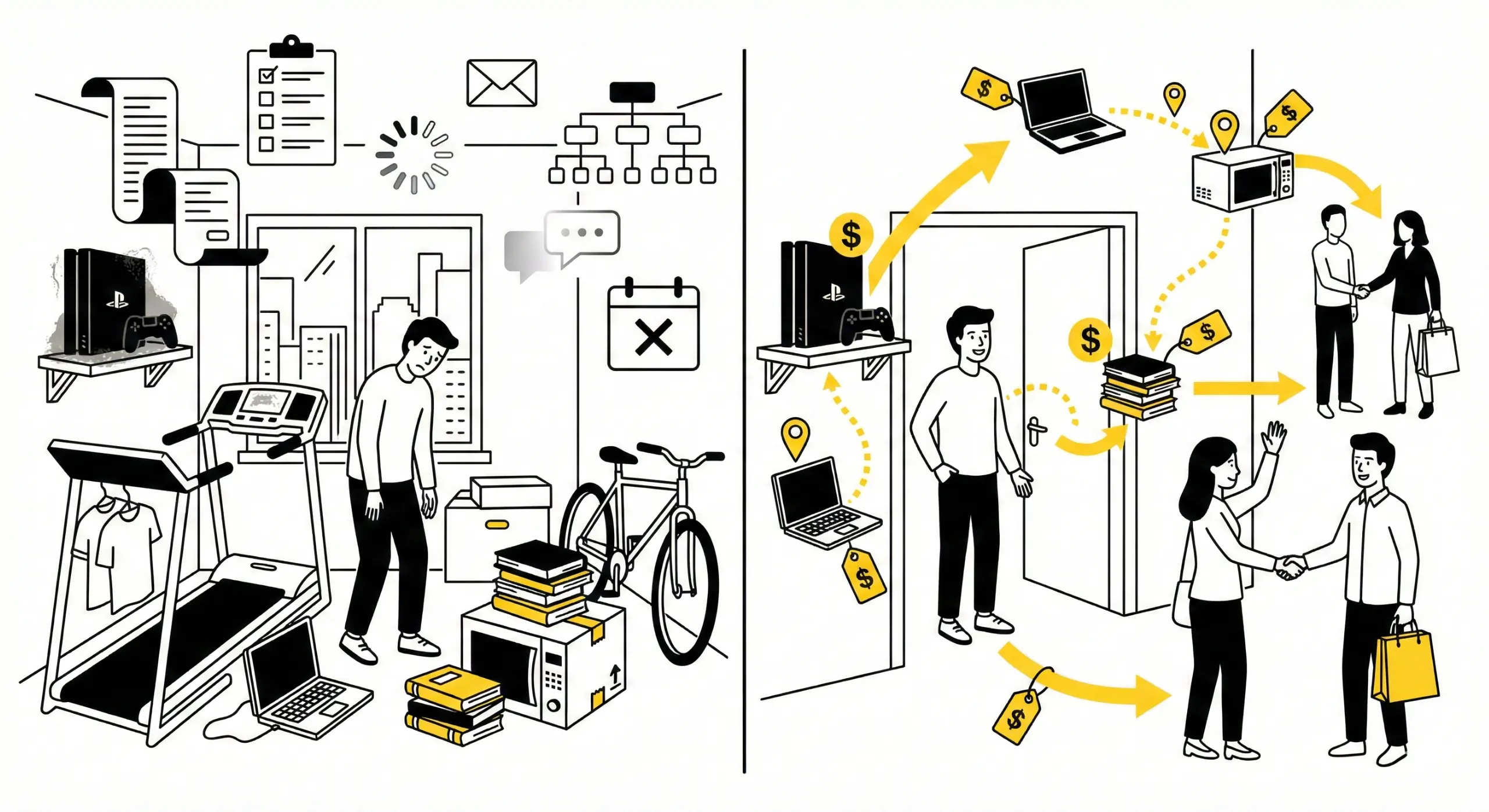
So it stays in the drawer. Along with the old laptop. The chair you replaced. The mixer you upgraded. All these items have value, but selling them feels like too much effort for your already busy life.
Most platforms require you to treat buying and selling like a side hustle. Complex listings. Constant monitoring. Detailed negotiations. It doesn’t fit into normal daily routines.
Sympl works differently. Simple classifieds designed to fit into your actual life. Quick listings when you have five minutes. Local connections that don’t require complicated coordination. Buying and selling that happens around your regular schedule, not instead of it.
Why Buying and Selling Feels Like Extra Work
Most people aren’t professional sellers.
They have jobs, studies, families, and responsibilities. Buying or selling items is something they need to do occasionally, not a daily activity.
But platforms often treat every user like a full-time seller.
Common friction points:
Creating listings takes too long. Multiple photos from different angles. Detailed specifications. Category selection. Tag additions.
Managing inquiries becomes a job. Notifications throughout the day. Questions from buyers in different time zones. Follow-ups you need to track.
Coordinating logistics feels complicated. Arranging courier pickups. Managing delivery schedules. Tracking shipments.
The time investment doesn’t match the value. Spending three hours to sell a ₹1,500 item doesn’t make sense for busy people.
When platforms make selling feel like work, most people simply don’t do it. Items sit unused instead of finding new owners.
How Quick Listing Creation Fits Busy Lives
The easier listing creation becomes, the more likely people actually do it.
Sympl’s approach recognizes that most sellers just want to post items quickly and move on with their day.
Practical listing in real life:
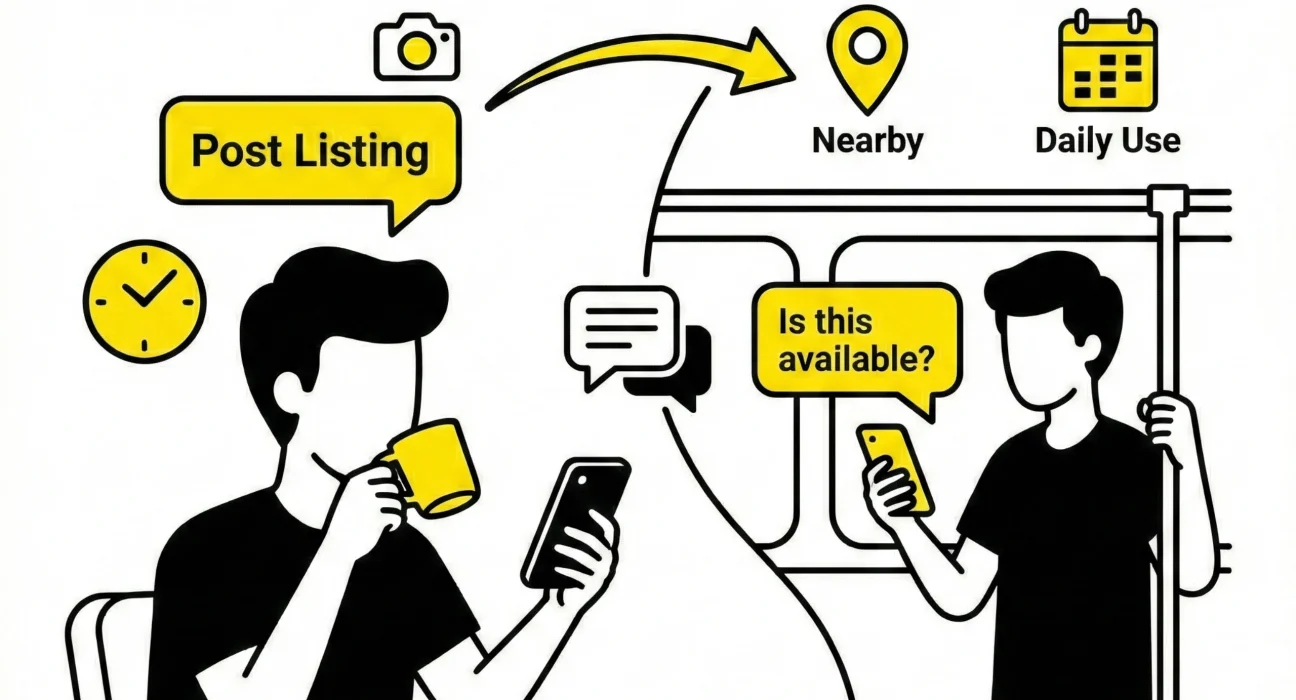
You’re having morning coffee. You remember the old phone. You grab it, take one clear photo, write “Samsung M32, 1 year old, works perfectly, ₹8,000,” add your area, and post.
Total time: three minutes.
That’s realistic for busy people. No photoshoot. No elaborate descriptions. Just the essential information local buyers need.
When selling items fast doesn’t require a time commitment, it becomes something you actually do instead of postpone indefinitely.
Fitting Buying Into Your Actual Schedule
Buying locally works around your life, not the other way around.
How this looks practically:
You need a study table. During lunch break, you quickly browse listings on Sympl. See three options nearby. Message sellers asking if you can visit Saturday afternoon.
Two respond yes. You visit both. Choose one. Take it home. Total active time spent: maybe an hour on Saturday.
Compare this to:
Searching large marketplaces. Adding items to cart. Comparing shipping costs. Placing order. Waiting days for delivery. Potentially dealing with returns if it doesn’t fit.
Local buying compresses everything into a time slot that already exists in your week a Saturday afternoon you’d have anyway.
The Role of Direct Communication in Saving Time
Direct buyer-seller chat eliminates unnecessary back-and-forth.
Typical efficient exchange:
Buyer: “Is the chair still available? Can I see it tomorrow evening?” Seller: “Yes, available. Tomorrow at 6 PM I work. Near Indiranagar Metro?” Buyer: “Perfect. See you then.”
Three messages. Meeting scheduled. Done.
No formal inquiry systems. No automated responses. No waiting for platform approvals.
For people managing packed schedules, this directness fits better than elaborate communication systems.
Local buyers and sellers appreciate efficiency because everyone’s time matters.
When Selling Becomes Part of Life Transitions
Certain life moments naturally create selling needs.
Common transition points:
Moving to a new city. You’re clearing out anyway. Listing items on Sympl takes minutes while you’re packing. Local buyers collect things as you prepare to leave.
Upgrading devices. A new phone arrives. The old one goes on Sympl immediately. Someone buys it before the box from your new phone reaches the recycling.
Finishing education. Semester ends. Hostel furniture, textbooks, appliances all need new homes. Quick listings help you clear out before leaving.
Changing life stages. Baby outgrows furniture. Fitness equipment stops being used. Hobbies change. Items that served one phase of life move to someone in that phase now.
Simple classifieds fit these transitions because they don’t require pre-planning or significant effort. You list as you go.
How Browsing Fits Into Casual Phone Time
Most people check their phones during downtime.
Waiting for a meeting. Commuting. Lunch breaks. Evening relaxation.
How Sympl browsing works:
You’re on the metro. Open Sympl. Browse what’s available locally. See a bike you’ve been considering. Message the seller. Continue your commute.
By the time you reach your stop, you’ve scheduled a viewing for the weekend.
This casual browsing fits existing phone habits. You’re not setting aside dedicated “shopping time.” You’re just checking what’s available while doing things you’d do anyway.
For low-cost buying opportunities, this casual approach often surfaces deals you wouldn’t find through intentional searching.
The Weekend Meeting Pattern
Most local transactions happen on weekends.
Working professionals can’t easily meet sellers during office hours. Students have classes. Families have routines.
Typical weekend pattern:
Friday evening: Browse listings. Message sellers about items you’re interested in.
Saturday or Sunday: Schedule 2-3 meetups in nearby locations. Visit in one loop. Make decisions based on actual inspection.
This batching makes sense. You’re already out. Visiting three sellers in the same neighbourhood takes less time than three separate trips on different days.
Sympl’s local focus enables this efficient weekend pattern. All sellers are nearby. Meetings don’t require crossing the entire city.
How Selling Fits Around Work Schedules
Working professionals can sell without disrupting their routine.
Practical approach:
List items during the week. Respond to messages when convenient lunch breaks, evening downtime.
Schedule all meetings for Saturday or Sunday. Pick a convenient public spot. Meet buyers one after another if multiple items are selling.
This shows that most people can’t leave work to meet buyers. Weekends work for everyone.
Local buyers and sellers understand this pattern. “Can we meet Saturday?” is a common, reasonable question everyone relates to.
The “Five-Minute Seller” Approach
Most items don’t need elaborate selling strategies.
Quick selling works when:
You price fairly. Check what similar items sell for. Price yours reasonably. Done.
You’re honest about the condition. “Small scratch on the side, otherwise perfect” takes ten seconds to type but prevents wasted meetings.
You respond promptly. When messages come, reply within a few hours. This keeps momentum without requiring constant monitoring.
You’re slightly flexible. “I prefer Saturday but Sunday morning could work too” closes more deals than rigid scheduling.
This five-minute approach to each listing means selling multiple items doesn’t become a time-consuming project.
When Buying Becomes Opportunistic
Sometimes you’re not actively shopping but stumble onto good deals.
Real scenarios:
You’re browsing casually. See someone selling a monitor for ₹3,000. You weren’t looking, but that’s a great price for something you’d eventually want.
Your message. The seller lives three blocks away. You walk over the same evening. Buy it.
Total unplanned time: 30 minutes. But you saved thousands versus buying new when you eventually needed it.
Simple classifieds enable this opportunistic buying. Because everything is local and direct, acting on good deals is practical, not complicated.
Who Benefits Most from This Casual Approach
People who don’t want buying and selling to be a hobby.
Students appreciate how it fits their irregular schedules. List items between classes. Meet buyers when convenient. No pressure or complexity.
Families managing multiple responsibilities don’t have time for complicated processes. Quick listings and weekend meetings work perfectly.
Working professionals with packed weekdays benefit from the weekend-focused transaction pattern. Their schedule gets respected.
Busy people who’d avoid selling entirely on complicated platforms actually sell on Sympl because the time investment is reasonable.
If your life is already full, platforms that respect your time work better than platforms demanding constant attention.
The Cost-Benefit Balance of Time Spent
Time is money. Literally.
Spending four hours managing a ₹2,000 sale doesn’t make sense if you value your time.
Sympl’s time efficiency:
Listing: 5 minutes Messaging: 10 minutes spread across a few days Meeting: 30 minutes on a weekend
Total: Under an hour for most transactions.
That time investment makes sense even for lower-value items. You’re not sacrificing significant time to recover value from unused items.
This balance makes selling items fast practical rather than theoretical. People actually do it because the math works.
Building the Habit of Regular Decluttering
When selling is easy, it becomes a regular habit.
Instead of accumulating unused items for years and then having a massive clear-out, you sell things as you stop using them.
The habit loop:
Notice you’re not using something. List it on Sympl during coffee break. Sell it over the weekend. Space clears. Cash recovers.
This ongoing decluttering prevents the overwhelming “I have too much stuff” moment because items move on continuously.
Simple classifieds support this habit because each transaction requires minimal effort. It becomes routine rather than a major project.
The Local Trust That Develops Over Repeat Use
Something interesting happens with repeat local transactions.
You start recognizing areas. “Oh, Koramangala sellers usually respond quickly.” “Meeting near that metro station is always convenient.”
You build comfort with the process. The first transaction feels new. The fifth transaction feels normal.
You might even encounter repeat buyers or sellers. “Didn’t we meet when you sold the table?” This builds community, however informal.
For local buyers and sellers, these accumulated experiences create familiarity that makes the platform feel integrated into local life.
How This Differs From Traditional Shopping Habits
Traditional shopping happens when you need something. You go to a store or website. You buy. Transaction ends.
Local buying and selling creates different patterns:
Ongoing awareness. You know Sympl has local options, so you check before buying new.
Opportunistic purchases. You find deals while browsing casually, not just when actively shopping.
Continuous selling. Items leave your home regularly as you stop using them, rather than accumulating.
Community transactions. You’re buying from and selling to people in your area, creating a different feel than anonymous retail.
These patterns integrate into life differently than traditional commerce. They’re more fluid and ongoing.
What Makes This Sustainable Long-Term
One-time platforms get abandoned. Tools people use repeatedly become habits.
Sympl’s approach has sustainability built in:
No burnout factor. You’re not constantly managing listings or fielding inquiries. You engage when you need to buy or sell, then disengage.
Actual value delivered. Each transaction saves money or recovers value. The benefit is real and immediate.
Minimal friction. Nothing about the process is annoying enough to make you quit. It just works simply.
Local relevance maintained. You don’t outgrow it. Whether you’re a student or a family or a professional, local buying and selling remains useful.
People keep using tools that fit their lives without demanding too much attention.
What This Means for Your Daily Life
Buying and selling doesn’t need to be a separate activity you schedule and plan.
It can be something that happens naturally around your existing routine.
List items when you have a few spare minutes. Browse while waiting for something. Meet buyers or sellers on weekends when you’re free anyway.
Sympl makes this possible by removing complexity and keeping everything local and direct.
You’re not learning a new system or adopting a new habit. You’re just using a straightforward tool when it’s useful, the way you’d use any practical service.
No pressure to become a power seller. No obligation to constantly check listings. No requirement to master strategies.
Just simple, local buying and selling that fits into your actual daily life whenever you need it.
That’s what makes it sustainable. It works around your life instead of requiring your life to work around it.