
Look around your house. Really look.
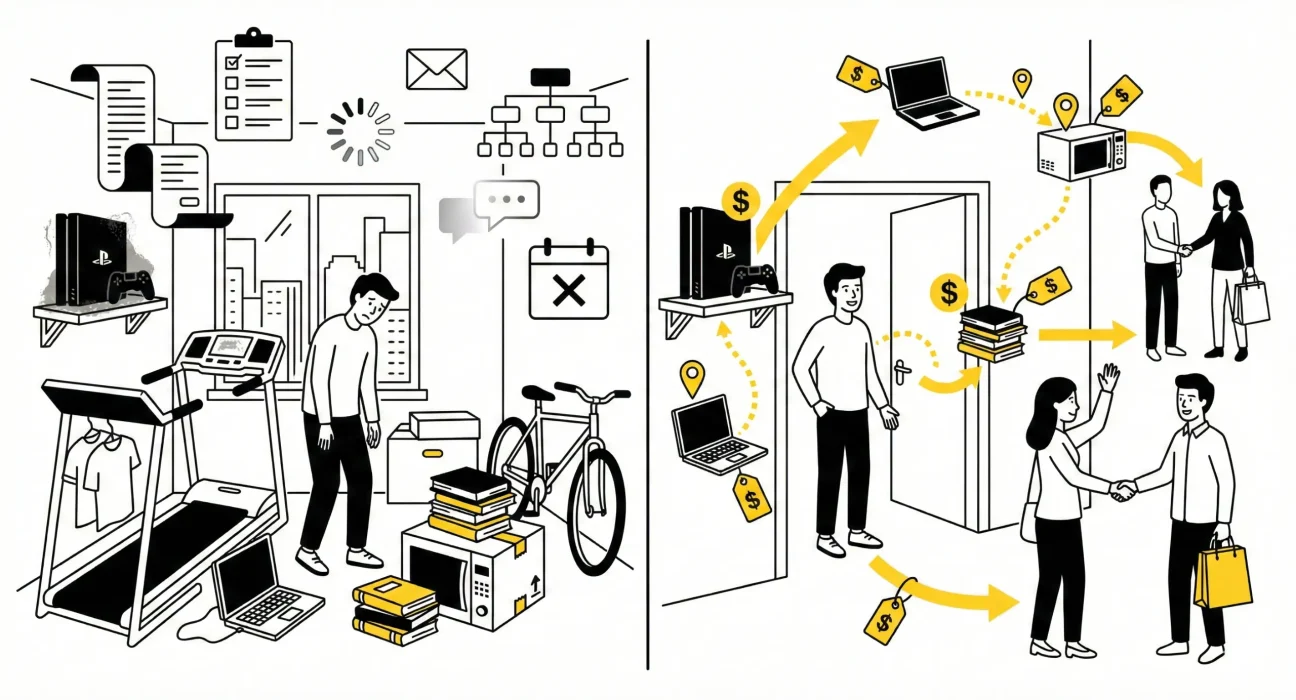
That treadmill you bought during lockdown is now a clothes hanger. The PlayStation 4 has been collecting dust since you upgraded. The perfectly good microwave was replaced when you renovated the kitchen. The bicycle you rode twice before realizing you’re not actually a cycling person.
You paid good money for all of it. And now? It’s just taking up space.
But here’s what most people don’t realize: keeping things you don’t use isn’t just wasteful. It’s actively costing you money. Every day you hold onto something you’ll never use again is another day you’re not getting cash back, and another day someone else is buying a brand new version of exactly what you already own.
The Real Cost of Clutter
Let’s do some quick math.
You bought a laptop three years ago for ₹45,000. Used it for work, then upgraded when you needed more power. The old one still works fine. Battery’s decent. Screen’s perfect. Just sitting in your cupboard “in case you need a backup.”
Right now, you could sell it for ₹18,000. Maybe ₹20,000 if it’s in great condition.
In six months? ₹15,000 if you’re lucky.
A year from now? ₹12,000.
Every month you wait, that laptop loses value. Not because it’s getting worse, but because newer models keep coming out and buyers keep having more options.
That’s ₹8,000 you’re essentially throwing away by doing nothing.
Now multiply this across everything in your house you’re not using. That phone in the drawer. The furniture that doesn’t fit your space. The camera you replaced. The gaming console from two generations ago.
Add it up. You’re probably sitting on ₹50,000 to ₹1,00,000 worth of items that are slowly becoming worthless.
Not because they’re broken. Because you’re waiting.
Why We Don’t Sell Things
You know you should sell that stuff. You’ve known for months. So why haven’t you?
It’s not laziness. It’s friction.
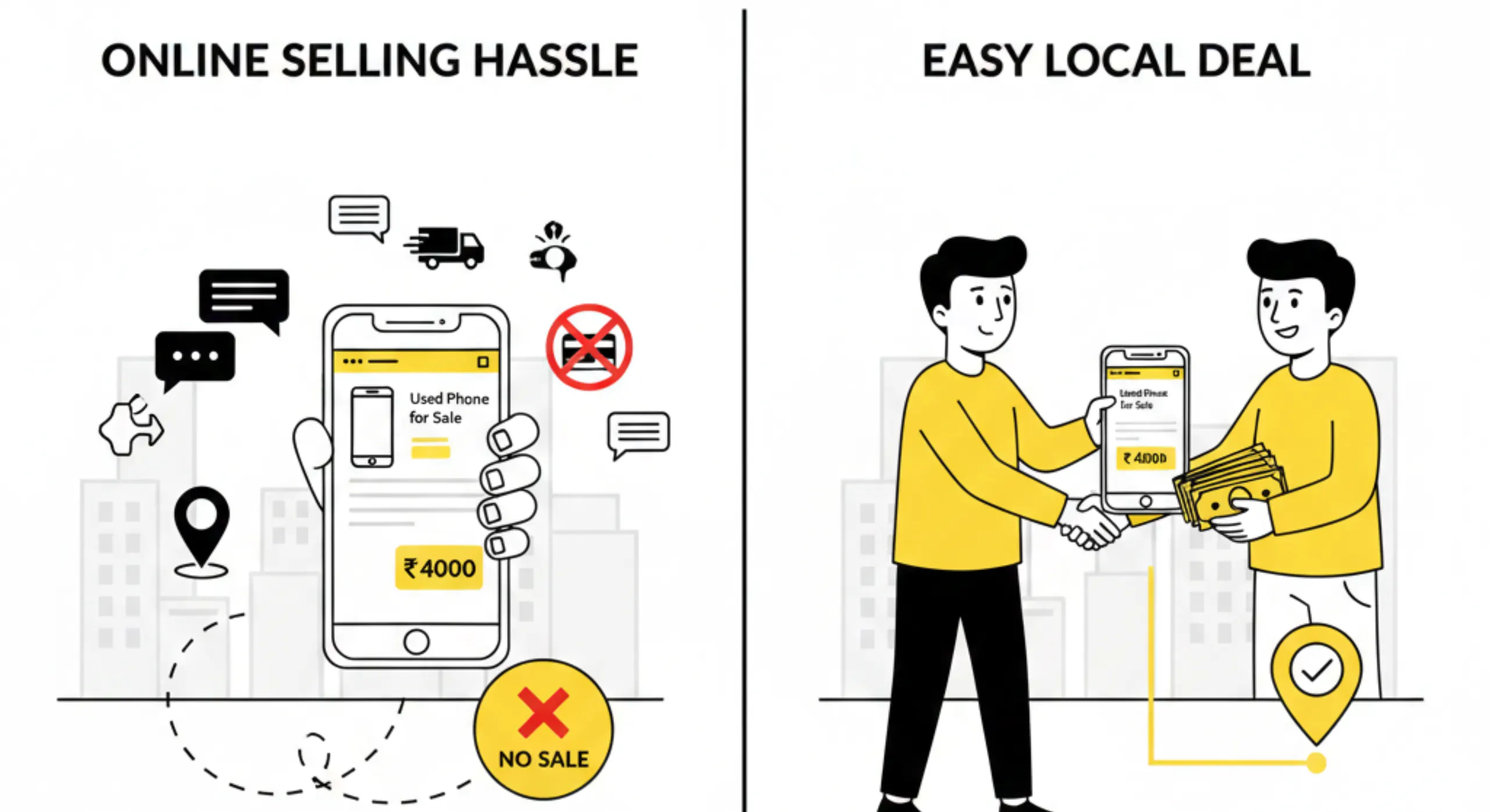
The process feels complicated. Take photos, write descriptions, figure out pricing, deal with dozens of messages from buyers who aren’t serious, coordinate meetings with people who don’t show up, negotiate with lowballers who waste your time.
By the time you think through all of that, it’s easier to just… leave it in the cupboard.
This is exactly the problem. The gap between “I should sell this” and “I actually sold this” is filled with unnecessary steps that make you give up before you start.
You open a marketplace app. See the forms. Close it. Tell yourself you’ll do it later.
Later never comes.
Meanwhile, that item keeps losing value.
What Actually Happens When You Wait Too Long
Let me tell you about the phone trap.
You upgrade to a new phone. Your old one is maybe a year old, still in good shape, and works perfectly. You think, “I’ll sell it soon.”
Month one: You could get ₹25,000 for it. But you’re busy. You’ll list it next week.
Month three: A new model launches. Your phone is now two generations old. Market price drops to ₹20,000.
Month six: ₹16,000 if you find the right buyer.
Month twelve: ₹12,000. Maybe.
You’ve lost ₹13,000 by waiting. That’s not a small amount. That’s a weekend trip. A good pair of headphones. Half your next phone’s cost.
And it happens with everything.
Furniture depreciates the moment you take it home. Electronics lose value faster than cars. Bikes, scooters, appliances, they all follow the same pattern: sell now or sell for less later.
The only question is: how much money are you willing to lose by procrastinating?
The Buyer Who’s Looking for Exactly What You Have
Here’s something most people don’t think about: while you’re ignoring that old laptop in your cupboard, someone in your city is searching for exactly that model.
A student needs it for college. They can’t afford a new one at ₹50,000, but ₹18,000? That works.
A freelancer is starting out. Needs a reliable machine for basic work. Doesn’t need the latest specs. Just something functional.
A parent wants to buy their kid a laptop for online classes without breaking the bank.
These people exist. Right now. In your neighborhood.
They’re checking marketplace apps. They’re scrolling through listings. They’re ready to buy today if they find the right item at the right price.
But they can’t find you. Because you haven’t listed it.
Every day you wait is another day they’re looking at someone else’s listing. Or worse, buying something new because they couldn’t find a good used option locally.
The match is there. The demand exists. You just have to make the connection.
How to Actually Get It Done
Selling doesn’t have to be complicated. You’ve just been using platforms that make it feel that way.
Here’s what the process should look like:
You decide to sell something. You open an app. You take three photos with your phone. You write two sentences describing it. You set a fair price based on what similar items are selling for. You hit publish.
Done. Five minutes total.
Then buyers near you see it. Local people who can actually meet you. No shipping logistics. No payment gateway complications. Just direct transactions between real humans.
Someone messages you. You reply. You set up a meeting at a public place. They check the item. They pay you. They take it home.
Transaction complete.
This is how it should work. No endless forms. No mandatory fields for information you don’t have. No complex verification processes that take days.
Just: list it, connect with a buyer, sell it.
When the process is this simple, you actually do it. You don’t procrastinate. You don’t overthink it. You just list the item and move on with your day.
The Local Advantage Nobody Talks About
There’s a reason local selling is faster and easier than trying to sell to buyers across the country.
Distance kills deals.
When a buyer is 500 kilometers away, everything gets complicated. Shipping costs. Packaging concerns. Trust issues. Payment holds. What if the item gets damaged in transit? What if the buyer claims it wasn’t as described?
All of this makes both parties hesitate. And hesitation means deals fall through.
But when a buyer is 3 kilometers away? Different story entirely.
They can come see the item today. They can inspect it in person. They can test it if they want. No risk of shipping damage. No worrying about descriptions not matching reality.
For you as a seller, it’s easier too. You meet them at a nearby café. They check the item. They hand you cash. Done.
No waiting for payments to clear. No packaging of fragile items. No trips to courier services. No stress about whether the item will arrive safely.
Local transactions are faster, simpler, and more reliable. That’s not an opinion. That’s just how proximity works.
Why Timing Matters More Than You Think
There’s a window for every item. Miss it, and you lose money.
Sell your phone within three months of upgrading? You’ll get strong offers.
Wait a year? You’ve missed the window. Too many newer options have flooded the market.
Sell your bike before the monsoon? Easier to find buyers. Try selling it during heavy rains? Fewer people are looking.
List furniture before the college semester starts? Students are actively searching. List it mid-semester? Demand drops.
None of this is complicated. It’s just about paying attention to when demand is highest and acting then instead of six months later.
The longer you wait, the more competition you face from newer items, and the lower your price needs to go to attract buyers.
The Platform You Actually Need
Here’s the truth: most marketplace platforms are built for scale, not for you.
They’re optimized for volume. For business sellers. For nationwide reach. For collecting data. For maximizing engagement.
What they’re not optimized for is helping a regular person sell a used phone quickly to someone nearby.
That’s the gap.
You don’t need 47 features. You don’t need algorithm-driven recommendations. You don’t need a complex rating system or dispute resolution process or shipping integrations.
You need three things: easy listing, local visibility, and fast transactions.
That’s it.
Sympl is built for exactly that. Nothing more complicated than necessary. Nothing less useful than you deserve.
List your item in minutes. Local buyers see it. You connect, meet, and close the deal.
No commission eating into your sale. No forms asking for information you don’t have. No waiting weeks for someone three states away to maybe commit.
Just direct, simple, local transactions between people who both benefit.
What This Means for You
Right now, you have items in your house worth real money. Not theoretical value. Not sentimental value. Actual cash that someone nearby will pay you for.
Every day you don’t list those items is another day you’re not getting that money back. Another day someone else is buying a brand new version of what you already have. Another day the value drops a little more.
You can change this today.
Not by spending hours figuring out complicated platforms. Not by dealing with shipping logistics and payment gateways. Not by coordinating with buyers who are too far away to meet easily.
Just by listing locally. Simply. Quickly.
When Sympl launches, you’ll have a platform that actually works the way you need it to. No barriers. No complexity. No wasted time.
The bike you haven’t touched? Someone wants it. The phone gathering dust? Someone needs it. The furniture that doesn’t fit? Someone’s looking for exactly that.
All you have to do is list it. The buyers are already there. They’re local. They’re ready to deal. They’re just waiting for you to make it available.
conclusion
Stop losing money on items you’re not using.
Stop waiting for the “right time” that never comes.
Stop overthinking a process that should take five minutes.
You already know what needs to go. You’ve known for months. The only thing stopping you is a platform that makes it harder than it needs to be.
That problem’s about to be solved.
Sympl launches soon. When it does, you’ll see exactly how much easier this can be.
Until then, just remember: every item sitting unused is money you’re not getting back. The sooner you act, the more you keep.
That’s not pressure. That’s just math.
Your stuff has value. Local buyers want it. And soon, connecting those two facts will be as simple as it always should have been.