

Introduction:
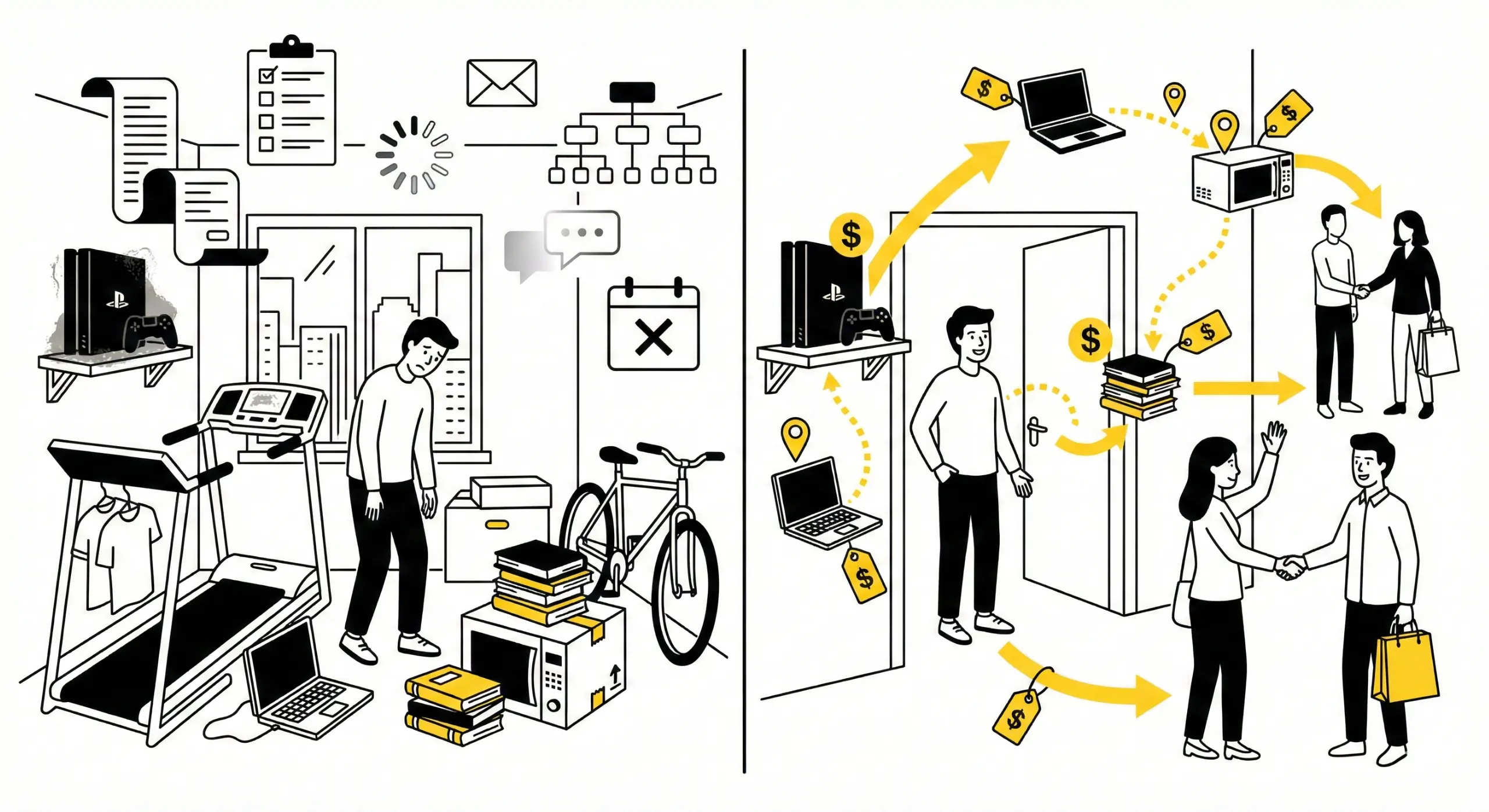
There is a family in your apartment complex selling a barely used air conditioner. A student two streets away needs one before summer hits. A working professional in the next building has a cycle he stopped using after switching to a cab, while a young couple nearby just moved in and is looking for one. Situations like this highlight The Role of Community in Hyperlocal Marketplaces, where people living in the same neighbourhood can easily buy and sell items within their local network.
None of them know about each other. And yet the transaction that would benefit all of them is entirely possible, if there were a way to connect people within the same community rather than losing them in a sea of citywide listings.
This is the gap that hyperlocal marketplaces are beginning to fill. And it is also why community plays such a central role in making local buying and selling work better than large, impersonal platforms. When you buy and sell locally within a shared community whether that is an apartment complex, a residential layout, or a familiar neighbourhood the entire experience changes in character.
In cities like Hyderabad, where dense residential clusters have grown rapidly across multiple localities, this community-based approach to commerce is both practical and increasingly preferred. The best classified sites in Hyderabad that understand this shift are the ones building toward genuinely local, community-supported transactions rather than simply adding more listings.
The Core Problem: Large Platforms Are Built for Scale, Not Community
Most online classifieds and second-hand marketplaces are designed around one idea: more listings, more users, more reach. That logic makes sense at the business level but it creates a real problem at the transaction level.
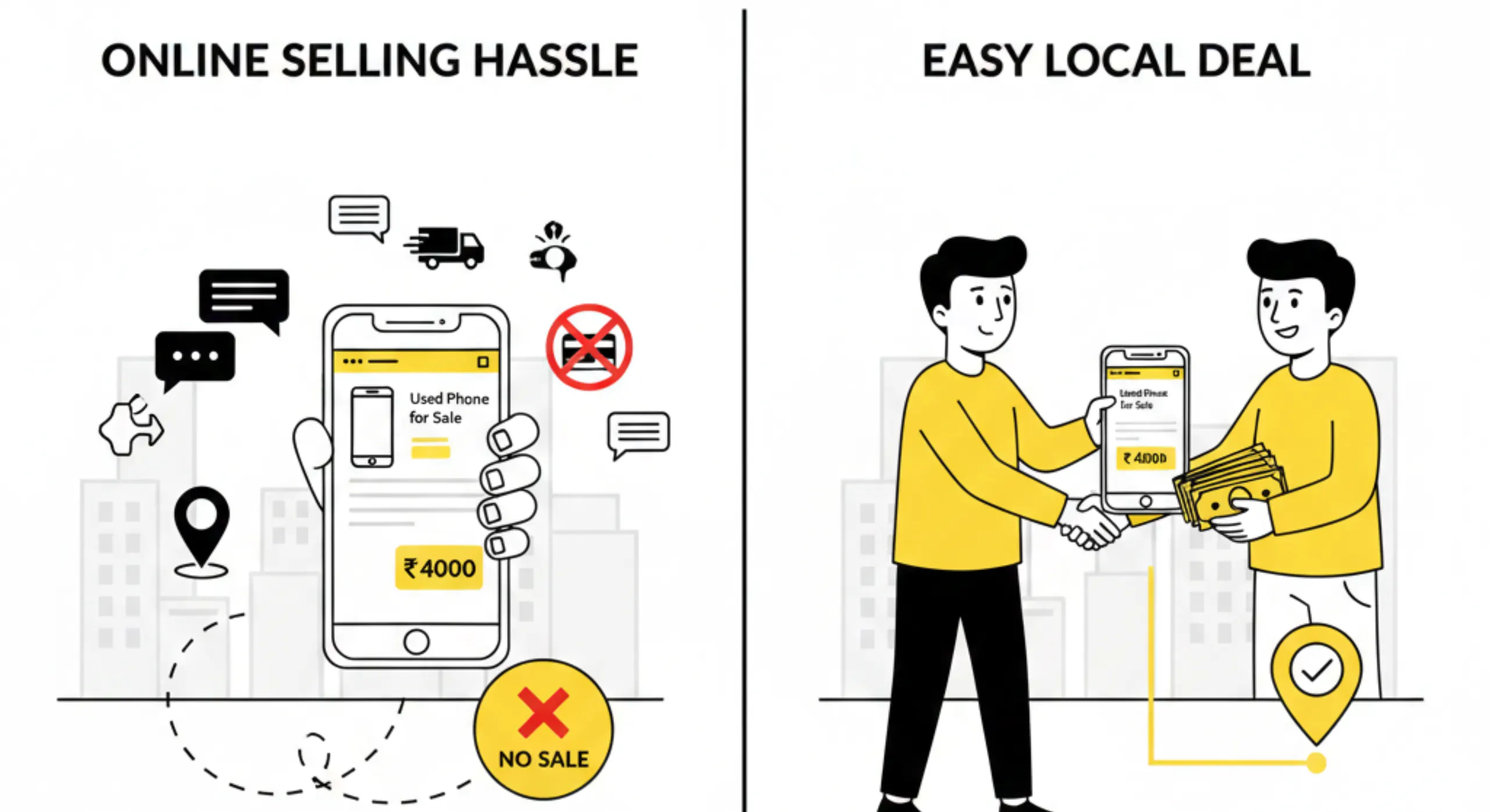
When you open a large platform looking for a second-hand sofa in Hyderabad, you might see listings from Secunderabad, Uppal, Miyapur, and Kukatpally all at once. Some sellers are genuine. Many are dealers posing as individuals. A few listings are weeks old and already sold. The item you actually need, listed by someone two kilometres away, is buried somewhere on page four.
There is no community here. There is just volume.
Volume creates noise. Noise creates hesitation. And hesitation is why so many transactions on large platforms take far longer than they should or never complete at all.
The alternative is not a smaller platform with fewer listings. It is a platform designed around community relevance, where the listings you see are from people who share your geography, your context, and often your situation.
What Community Means in the Context of a Hyperlocal Marketplace
Community in a hyperlocal marketplace is not about social networking or building online connections. It is about something more practical and grounded.
It means that the people buying and selling on a platform are from the same area, speak the same practical language about localities and landmarks, and operate within a shared set of social and geographic reference points.
In Indian cities, this kind of community already exists in several forms:
Apartment societies and gated communities are the most concentrated version. Hundreds of families living in the same complex, sharing maintenance committees, WhatsApp groups, and common areas. The buying and selling potential within a single large apartment complex is significant but currently has no clean channel.
Residential layouts and colony areas are another layer. Localities like Jubilee Hills, Kondapur, Sainikpuri, or Dilsukhnagar in Hyderabad have distinct identities. Residents within these areas share a familiarity that extends naturally to commerce.
Neighbourhood clusters near schools, colleges, and tech parks form informal communities of shared need. Students near a university, families near a school, professionals near an IT corridor these groups often need the same things and have the same things to sell.
When a classified platform maps onto these existing communities rather than ignoring them, the transactions that happen within it are fundamentally different in quality.
How Community Changes the Dynamics of Buying and Selling
Listings Are More Relevant
When you are browsing within your community or locality, every listing is at least geographically relevant. You are not scrolling past listings from distant parts of the city. You are seeing items that could be inspected today, picked up tomorrow, and paid for on the spot.
Relevance is the foundation of a useful marketplace. Community provides that relevance without requiring complex algorithms.
Sellers Are More Accountable
A seller who lives in your neighbourhood or your apartment complex is not faceless. They are, in some way, a known entity. They may not know you personally, but you share a gate, a market, a road. That shared geography creates natural accountability.
Sellers in a community context tend to be more honest in their listings because the cost of misrepresentation is felt locally. Word travels within communities. A seller who gives a fair deal builds a quiet reputation. One who does not tends to find fewer takers over time.
Buyers Are More Serious
Community buyers who respond to a listing are genuinely interested. They can see the item. They can come today. They are not browsing from the other side of the city with no real intention of travelling.
This filters out a significant portion of the low-quality enquiries that plague sellers on large platforms. Fewer ghost buyers, fewer people who negotiated hard and then disappeared, fewer messages that go nowhere.
Transactions Complete Faster
When buyer and seller are in the same community, the gap between initial enquiry and completed transaction shrinks considerably. There is no shipping to coordinate, no waiting for a courier, no uncertainty about delivery. The buyer visits, inspects, pays, and takes the item. Often within a day of the first message.
This is what it genuinely means to sell items fast not through premium listings or boosted visibility, but through real proximity and shared community context.
Practical Examples of Community-Driven Local Transactions
These examples reflect situations that happen regularly in Indian residential communities:
A family in a Kondapur apartment complex lists their old dining table on Sympl. Three families in the same complex and two in the adjacent one respond within a day. The table is sold to a neighbour who inspects it in the morning and takes it the same evening. No shipping, no platform commission, no back-and-forth about conditions.
A student in a PG accommodation near a Hyderabad college lists his previous semester’s textbooks. Three junior students from the same college area message within hours. The books sell at a fair price, the buyer saves compared to buying new, and both sides feel the transaction was straightforward.
A working professional in a Gachibowli layout has a treadmill bought during lockdown and rarely used since. She lists it on a local classifieds platform. A buyer from a building two hundred metres away comes over, tests it, and pays cash. Done in thirty minutes from first message to handover.
A family relocating from Manikonda needs to clear an air conditioner, a washing machine, and a wardrobe before their move date. They list on Sympl. All three items sell within three days to buyers from the same locality and the adjacent one. No transport hassle for the sellers, no delivery cost for the buyers.
These are not exceptional cases. They are what community-based local buying and selling looks like when the right platform connects the right people.
How Sympl Supports Community-Based Local Buying and Selling
Platforms that genuinely serve hyperlocal communities do a few things differently from large classified marketplaces.
They prioritise geographic relevance over volume. A buyer in Kukatpally should see listings from Kukatpally and nearby localities first, not a mixed feed from across the city.
They keep the transaction direct. No unnecessary intermediaries, no platform-managed shipping, no escrow layers that complicate simple exchanges. The buyer and seller talk directly and complete the transaction between themselves.
They make listing and browsing straightforward. Community sellers are often not professional sellers. They are families, students, and working individuals who want to list an item quickly and find a genuine buyer nearby. A platform that requires minimal effort to list and browse serves this need honestly.
Sympl is built around these principles. The focus is on enabling direct connections between local buyers and sellers in the same city and locality, without the noise and complexity that makes large platforms frustrating for everyday use.
This is what Sympl Classifieds look like when they are actually designed for the people who use them.
Cost and Time Benefits of Community-Level Local Commerce
The savings from community-based buying and selling are practical and consistent.
No delivery or logistics cost. Items exchanged within a community are carried by the buyer or dropped off by the seller within a short distance. The cost of transport for heavy items like appliances and furniture can be significant when buying from across the city. Community transactions eliminate it.
Faster sale cycles. An item listed within a relevant community sells faster because the audience seeing it is genuinely able to act on it. Less time waiting, less time relisting, less time managing enquiries from buyers who were never going to travel.
Fairer prices without platform fees. When buyer and seller transact directly through a platform that does not take a commission on each deal, the savings are shared between them. The seller does not need to inflate prices to cover fees. The buyer gets low-cost buying without artificial markups.
Fewer failed transactions. Community accountability means fewer buyers who back out, fewer sellers who misrepresent, and fewer deals that fall apart at the last moment. That saved time and frustration has a real value that is easy to underestimate until you have experienced both.
Who Benefits Most From Hyperlocal Community Marketplaces
Families in Apartment Complexes and Residential Layouts
They are the most natural community sellers. Moving out, upgrading appliances, clearing children’s items that have been outgrown all of these create regular selling opportunities within the community. A local classifieds platform that reaches their own neighbourhood first makes every transaction faster and easier.
Students Near Colleges and Universities
Student communities are dense, their needs are predictable, and their budgets are limited. A hyperlocal platform serving their immediate area enables low-cost buying of textbooks, laptops, furniture, and daily-use items from sellers who are genuinely nearby and often in the same situation.
Working Professionals in Tech Corridors
Hyderabad’s tech corridors have concentrated populations of working professionals with similar consumption patterns. They buy and sell the same kinds of items: electronics, exercise equipment, furniture and they value speed and convenience above almost everything else. Community-based classifieds deliver both.
First-Time Sellers Looking for Trusted Buyers
For someone selling online for the first time, the community context removes much of the anxiety. Knowing the buyer is from the same area or the same complex makes the handover feel safe and manageable rather than risky.
Anyone Who Prefers Direct, Low-Fuss Transactions
There is a growing preference among Indian urban residents for transactions that are direct, honest, and completed quickly without platform complexity. Community-based local classifieds serve this preference better than any large marketplace can.
Conclusion:
Hyperlocal commerce works because community is not something that needs to be built from scratch. It already exists in every apartment complex, every residential layout, every neighbourhood cluster in Indian cities.
What it needs is a way to channel the buying and selling that already wants to happen within these communities without the noise, complexity, and impersonal scale of large platforms getting in the way.
When people buy and sell locally through Sympl Classifieds that genuinely serve their community, the transactions are faster, more honest, more affordable, and more satisfying for both sides. The item gets to someone who needs it. The seller clears space and gets fair value. The community becomes a little more connected in the process.
Sympl, among the best classified sites in Hyderabad for community-based local buying and selling, is built to support exactly this kind of commerce. Not as a technology solution looking for a problem, but as a straightforward platform that recognises what already works and tries to make it easier.
Your community is already a marketplace. Sympl helps you use it.