
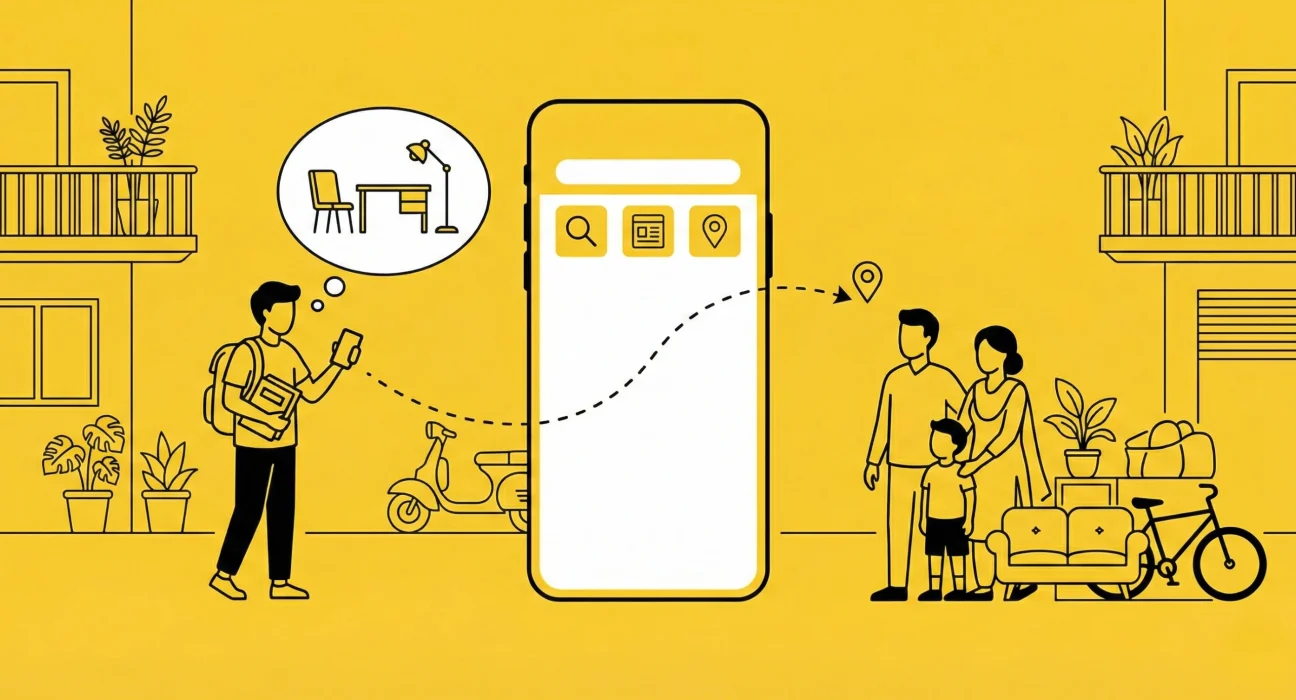
A college student needs a study table but can’t afford a new one. An elderly couple three streets away is downsizing and needs to sell their spare furniture quickly.
Without a way to connect locally, the student buys nothing or settles for something unsuitable. The couple either discards perfectly good furniture or lets it gather dust.
Both lose and the neighborhood loses too.
When people buy and sell locally through simple classifieds like Sympl, these connections happen naturally. Money stays within the community, relationships form through direct transactions, and neighborhoods become more resourceful and connected.
This isn’t about grand economic theories. It’s about practical benefits that show up in everyday life when local trade is easy and accessible.
Why Distance Matters More Than People Realize
Most buying and selling happens at a distance now items manufactured elsewhere, sold through national platforms, shipped from warehouses in other states.
This creates several problems for individuals and communities:
Money leaves the area immediately:
When you buy from a distant seller or marketplace, your payment goes elsewhere. None of it circulates locally or helps your neighbors.
No personal accountability:
Transactions with strangers far away feel anonymous. There’s less incentive for honesty on both sides.
Transportation costs and delays:
Shipping adds expense and waiting time. For urgent needs or budget constraints, this doesn’t work.
Waste increases:
When selling locally is difficult, people discard items rather than finding new homes nearby.
Community connections weaken:
You never meet the seller, never have a conversation, never build any relationship beyond the transaction.
Local trade solves these issues not through complexity but through proximity.
How Local Buying and Selling Strengthens Neighborhoods
When people in the same area exchange goods directly, several things happen beyond the transaction itself.
Economic activity stays local:
The ₹8,000 you pay for a neighbor’s refrigerator goes to someone in your community, who then spends it at local shops or services. Money circulates instead of disappearing.
Trust networks develop:
After a smooth transaction, you might recommend that seller to friends or return to them for other items. Reputation matters when you’re part of the same community.
Resources get used more efficiently:
That extra bike sitting unused in someone’s garage becomes someone else’s daily commute. Items serve more people instead of being underused.
Less waste generation:
When selling locally is easy through platforms like Sympl, people resell rather than discard. Functional items stay in use.
Neighbors meet and connect:
A transaction over a washing machine might lead to a conversation about the neighborhood, shared recommendations, or just familiarity with people living nearby.
These aren’t abstract benefits. They’re practical improvements to how communities function.
Real Examples of Local Trade Creating Value
Student housing areas:
When seniors graduate, they sell textbooks, furniture, and appliances to juniors. The same study lamp might serve five different students across five years, saving each one money while staying within the campus community.
Residential neighborhoods:
Families upgrade refrigerators, washing machines, or furniture and sell the old ones to newcomers setting up homes. Young professionals moving to the area furnish entire apartments affordably by buying from neighbors who are relocating.
Working professional clusters:
People upgrading phones or laptops sell to colleagues or neighbors who need functional devices at lower prices. A ₹50,000 laptop becomes ₹25,000 after two years, still perfect for someone with lighter computing needs.
Transitional communities:
In areas where people move frequently in rental neighborhoods, corporate housing areas—local trade becomes essential. Items circulate continuously as people arrive and depart.
In each case, the community becomes more self-sufficient. People’s needs get met locally without dependence on distant sellers or expensive new purchases.
How Simple Classifieds Enable Community Trade
Complex platforms with national reach work against local connections. Simple classifieds designed for local buyers and sellers work with them.
Location-based discovery:
When you search, you see items from your area first. This makes local transactions the default, not an afterthought.
Direct communication:
Messaging someone from your neighborhood feels different from messaging a stranger across the country. Conversations are more personal and trust develops faster.
Easy meetups:
“Can we meet at the coffee shop near the metro station?” works when both parties know the area. Coordination is simple and quick.
No shipping complications:
Cash or instant UPI transfer, immediate pickup, face-to-face inspection and local transactions avoid all the friction of distance buying.
Community-appropriate pricing:
Local buyers and sellers understand the area’s economic context. Pricing naturally adjusts to what neighbors can actually afford.
On Sympl, these design choices aren’t accidental. The platform exists specifically to facilitate local trade, keeping the focus on communities rather than nationwide commerce.
Economic Benefits That Reach Beyond Individual Transactions
When local trade thrives, the economic effects spread through the community.
Local spending multiplies:
Money earned from selling items locally often gets spent locally too at neighborhood shops, services, or on other local purchases.
Affordability improves:
When good second-hand options exist nearby, people don’t need to stretch budgets for new items. This leaves more money for other needs.
Small supplementary income:
Selling unused items provides occasional cash without formal employment. For students, retirees, or homemakers, this flexibility helps.
Reduced dependency on credit:
When you can buy a functional washing machine for ₹8,000 instead of a new one for ₹20,000, you don’t need to take loans or use credit cards.
Asset efficiency:
Communities where items circulate well get more total value from fewer total possessions. This reduces both individual expense and collective waste.
These aren’t dramatic economic transformations, they’re small improvements that compound over time.
Social Benefits of Face-to-Face Local Trade
Beyond economics, local trade builds social fabric that distant commerce can’t.
Conversations happen:
When you meet someone to buy their dining table, you talk about the neighborhood, about where they’re moving, about shared experiences in the area.
Trust develops naturally:
Successful local transactions create goodwill. You’re not just strangers who exchanged money for goods, you’re neighbors who helped each other.
Community knowledge spreads:
During pickups, people share information: which repair shop is reliable, which building has vacancies, where to find specific services.
Networks form:
“I sold my bike to someone who knows someone who might want your sofa” these informal networks help items find the right homes faster.
Older residents stay connected:
For people who don’t use complicated technology, simple classifieds offer a way to participate in modern commerce without confusion.
In an increasingly digital world where many interactions are distant and impersonal, local trade maintains human connection.
Environmental Impact Without the Lecture
Local trade benefits the environment, but you don’t need to care about that for it to work.
Items stay in use longer:
When selling locally is easy, people pass items along instead of discarding them. This reduces waste without any conscious environmental effort.
Less transportation:
No delivery trucks, no packaging materials, no fuel consumption. You walk or drive a short distance for pickup.
Reduced manufacturing pressure:
Every second-hand purchase is one less new item that needs to be manufactured, shipped, and eventually discarded.
Resource efficiency through circulation:
The same furniture, appliances, and electronics serve multiple households over their full useful life instead of being replaced prematurely.
But here’s the key: these environmental benefits are side effects of practical choices made for economic and convenience reasons.
People participate in local trade because it saves money and time, not because they’re trying to save the planet. The environmental benefits happen regardless.
Cost Savings That Benefit Entire Communities
When low-cost buying options exist locally, everyone’s budget goes further.
Students:
Instead of spending ₹30,000 on textbooks and furniture, they spend ₹12,000 buying second-hand from seniors. That saved ₹18,000 goes toward living expenses or education needs.
Young families:
Setting up a first home costs ₹1-2 lakhs for furniture and appliances when buying new. Through local second-hand purchases, the same setup costs ₹40,000-60,000.
Senior citizens:
Fixed incomes stretch further when necessary replacements: a fan, a phone, a chair can be bought affordably from neighbors.
Budget-conscious households:
Even middle-income families appreciate spending less on items that don’t need to be new, freeing money for priorities like education or healthcare.
These savings accumulate. A community where local trade is active is a community where money works harder for everyone.
Time Benefits of Trading Locally
Distance transactions consume time. Local ones save it.
Faster searching:
Looking for a fridge nearby gives you 10-15 options you can inspect within a day, not 100 options across the country that require days of research.
Immediate inspection:
See it today, buy it today, use it today. No waiting for shipping or dealing with delivery schedules.
Quick problem resolution:
If something’s wrong after purchase, meeting the seller again is simple when you’re both local.
Convenient coordination:
“I’ll be home after 6 PM” works when the buyer is 10 minutes away. Nobody needs to take a day off work for a transaction.
For busy working professionals and families, this time efficiency makes local trade the practical choice even when other options exist.
Who Benefits Most From Local Community Trade
Students in college towns:
Entire ecosystems of local trade develop around academic calendars, textbooks, furniture, appliances circulating among cohorts.
Residential societies and apartment complexes:
Within-community trade is incredibly efficient. Same building pickups take 5 minutes and everyone benefits from proximity.
Families with children:
Kids outgrow items constantly. Local trade means both selling what your children outgrew and buying what they need next, all from neighbors.
People relocating:
Whether arriving or departing, local trade helps you furnish or clear a home quickly without shipping costs or long-distance coordination.
Retirees downsizing:
Selling accumulated possessions locally is simpler and more personal than dealing with distant buyers or impersonal removal services.
Anyone living in a community which is everyone benefits when local trade is easy and accessible through platforms like Sympl.
How Simple Platforms Build Trading Communities
Complex marketplaces focus on maximizing transactions across the widest geography. Simple classifieds focus on facilitating connections within communities.
No platform fees means better value stays local:
When there’s no commission, the full transaction value goes to the seller, who likely spends it in the same area.
Easy posting encourages participation:
When listing takes 2 minutes, more people sell instead of discarding. This increases local inventory.
Direct messaging builds relationships:
Platform-controlled communication feels corporate. Direct messaging feels human and community-appropriate.
Location visibility promotes local-first thinking:
When the platform shows you nearby options prominently, you naturally consider local trade before looking elsewhere.
Simplicity attracts diverse users:
From tech-savvy students to older residents who prefer straightforward tools, simple platforms serve the entire community.
Sympl works because it prioritizes these community-building features over extractive business models or unnecessary complexity.
Practical Ways Local Trade Improves Daily Life
Beyond economic and social benefits, local trade solves everyday problems.
Urgent needs met quickly:
Your refrigerator breaks, you need a replacement fast. Finding one locally means you’re not stuck without refrigeration for a week waiting for delivery.
Try before committing:
Testing furniture in your actual space before buying is only possible with local transactions. This reduces returns and buyer’s remorse.
Building local knowledge:
Through transactions, you learn which neighborhoods have what you’re looking for, who’s reliable, what fair local prices are.
Flexible negotiation:
Face-to-face conversation allows nuanced negotiation that online messaging can’t match. Both parties can gauge seriousness and adjust accordingly.
Community self-sufficiency:
A neighborhood with active local trade becomes less dependent on external commerce for everyday needs.
These aren’t revolutionary changes—they’re small conveniences that make life easier.
Common Concerns About Local Trade
“Is it safe to meet strangers?”
Meet in public places during daylight. Most people in your community are just normal neighbors. Local reputation also adds accountability that distant transactions lack.
“Will I get good prices?”
Local doesn’t mean expensive. Competition among local sellers keeps prices fair, often better than distant sellers once you factor in shipping.
“Are there enough options locally?”
In active communities using simple classifieds, local inventory is surprisingly deep. As more people participate, selection improves.
“What if I need something specific?”
Start local. If you don’t find it, you can always look wider. But checking local options first costs nothing and often succeeds.
These concerns are valid but often overstated. Most local transactions proceed smoothly, especially on platforms designed for straightforward community trade.
The Long-Term Effect of Active Local Trade
Communities with thriving local commerce develop distinct characteristics over time.
Greater resilience:
When residents can meet needs locally, external disruptions matter less. The community becomes more self-reliant.
Stronger social networks:
Repeated interactions build familiarity. Communities feel less anonymous and more connected.
Better resource allocation:
Items flow to where they’re needed instead of sitting unused. Community-wide, this is more efficient.
Economic vitality:
Money circulating locally supports local businesses and services, creating positive feedback loops.
Reduced inequality:
When good items are available affordably through local second-hand markets, income differences matter less for accessing necessities.
These aren’t planned outcomes; they emerge naturally when local trade is easy and active.
Conclusion
Communities benefit from local trade not through grand interventions but through countless small exchanges that add up.
A student finds affordable furniture. A family sells items they no longer need. A neighbor discovers someone reliable. Money stays local. Waste decreases. Connections form.
None of this requires ideology or commitment to community-building, just practical people making practical choices.
When platforms like Sympl make it easy to buy and sell locally through simple classifieds, these benefits happen naturally. No complexity, no fees, no friction, just neighbors helping neighbors while helping themselves.
That’s how strong communities develop: not through programs or initiatives, but through simple systems that make useful interactions easy.
Local trade works because it’s practical. The community benefits are just what happens when practical solutions scale across many people making many small exchanges.