
Introduction:
A working professional in Hyderabad spent forty minutes on a video call before buying a second-hand camera. The experience highlights Why Face to Face Deals Still Matter in 2026, as remote checks often miss real issues.
The camera arrived two days later. The autofocus was unreliable. The shutter count was far higher than stated. The seller was politely unresponsive after delivery.
A colleague of hers bought a similar camera the same week. She found a seller in the next locality through a local classifieds platform, visited on a Saturday morning, tested the camera properly with her own memory card, and paid after she was satisfied. She has had no issues since.
Same category. Very different outcomes. The difference was not the platform or the price. It was whether the buyer could see, touch, and test the item before money changed hands.
In 2026, with every possible digital tool available for remote verification, face-to-face deals remain the most reliable way to complete a second-hand transaction. For anyone who wants to buy and sell locally with confidence, this is not a limitation to work around. It is an advantage to use deliberately.
The best classified sites in Hyderabad that enable genuinely local connections between buyers and sellers are the ones that make face-to-face transactions easy, not the ones that try to replace them with digital substitutes.
The Core Problem: Remote Transactions Carry Risks That Technology Has Not Eliminated
Every year, the tools available for remote verification of second-hand items improve. Video calls are clearer. Photo quality is better. AI-assisted product identification is more capable. And yet the fundamental problem with buying something you cannot physically inspect before paying remains unsolved.
A camera with a high shutter count looks the same in a video call as one with a low count. A washing machine with a failing motor can be demonstrated working for thirty seconds without the fault showing. A piece of furniture with a structurally compromised joint looks fine in every photo taken from the right angle.
This is not always deliberate misrepresentation. Sellers sometimes genuinely do not know about faults. Items that worked fine last month develop problems that have not yet been noticed. Photos taken in good light on a good day do not capture the reality of everyday condition.
The buyer who sees the item in person, tests it themselves, asks questions while looking at the actual object, and pays only after being satisfied is in a fundamentally stronger position than one who relies on remote verification of any kind.
In 2026 this remains as true as it has always been. Digital tools have improved the experience of remote transactions but they have not changed the basic information asymmetry between a buyer who has seen an item and one who has only seen photos or video of it.
What Face-to-Face Transactions Provide That Remote Ones Cannot
Understanding the specific advantages of in-person deals helps buyers and sellers approach local classifieds more deliberately.
Complete and Unmediated Product Assessment
When you are physically present with an item, your assessment is not filtered through a camera lens, a compressed video stream, or a seller’s choice of what to show.
You see the item in the light it actually exists in. You notice the small scratch on the side that was just outside every photo frame. You hear the slight rattle in the washing machine drum that no video call would have captured. You feel whether the laptop keyboard has the right response or whether certain keys have started to stick.
This unmediated assessment is the only version that gives you complete information before making a payment decision.
For second-hand items especially, where condition is the primary variable that determines value, this complete assessment is not a nice-to-have. It is the foundation of a fair transaction.
Immediate Negotiation Based on Actual Condition
In a remote transaction, negotiation happens based on what both sides have been told or shown. In a face-to-face transaction, negotiation happens based on what both sides can see.
This changes the dynamic significantly. If a buyer notices a minor issue during inspection that was not mentioned in the listing, they can raise it immediately and factor it into the price on the spot. The seller, seeing that the buyer is engaged and present, is more likely to negotiate reasonably than to become defensive.
The result is a price that actually reflects the item’s condition rather than a theoretical price based on incomplete information.
Payment and Handover in the Same Moment
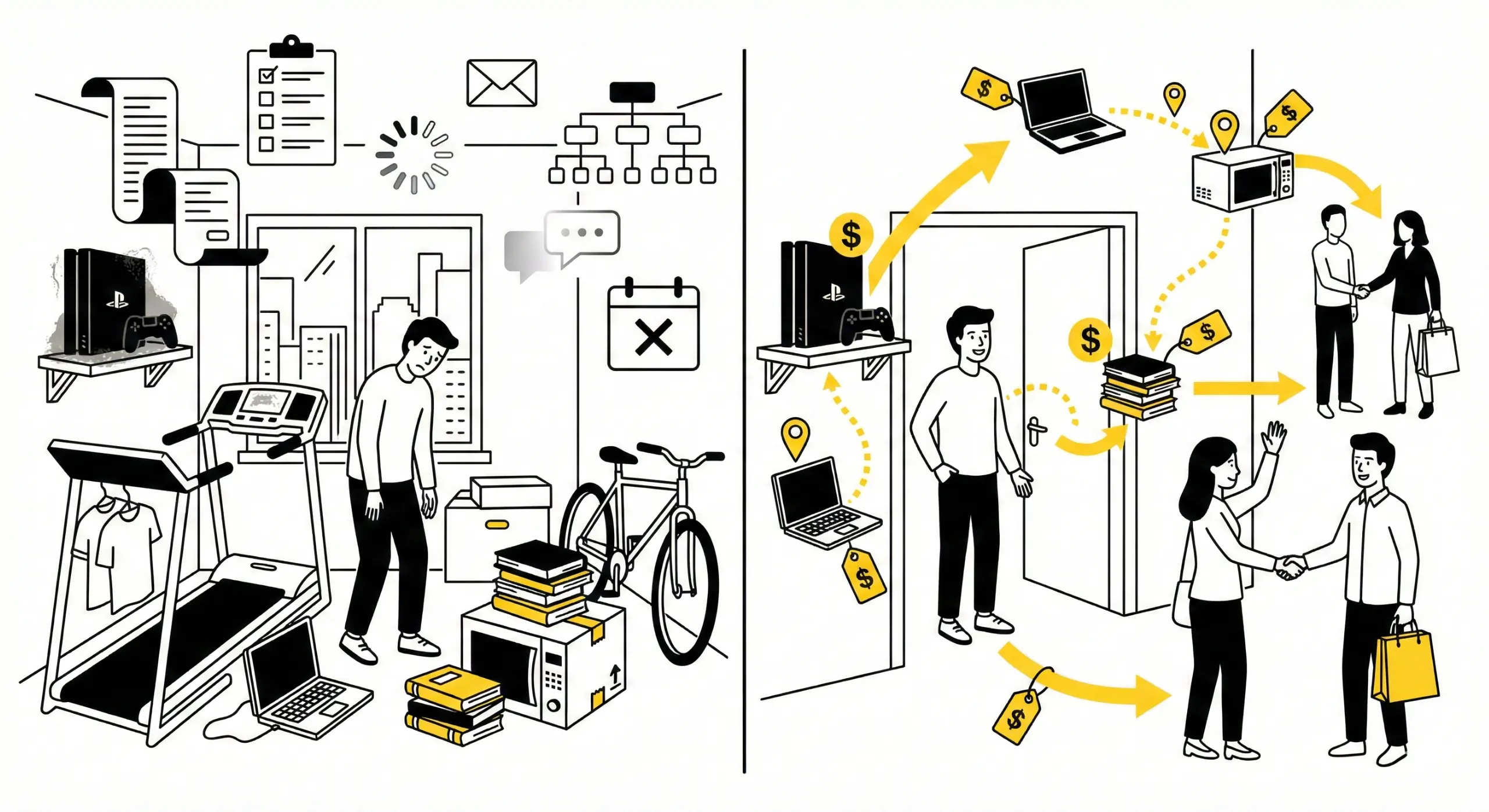
The cleanest possible transaction structure is one where payment and handover happen simultaneously. The buyer pays. The seller hands over the item. Both parties leave satisfied with no outstanding uncertainty.
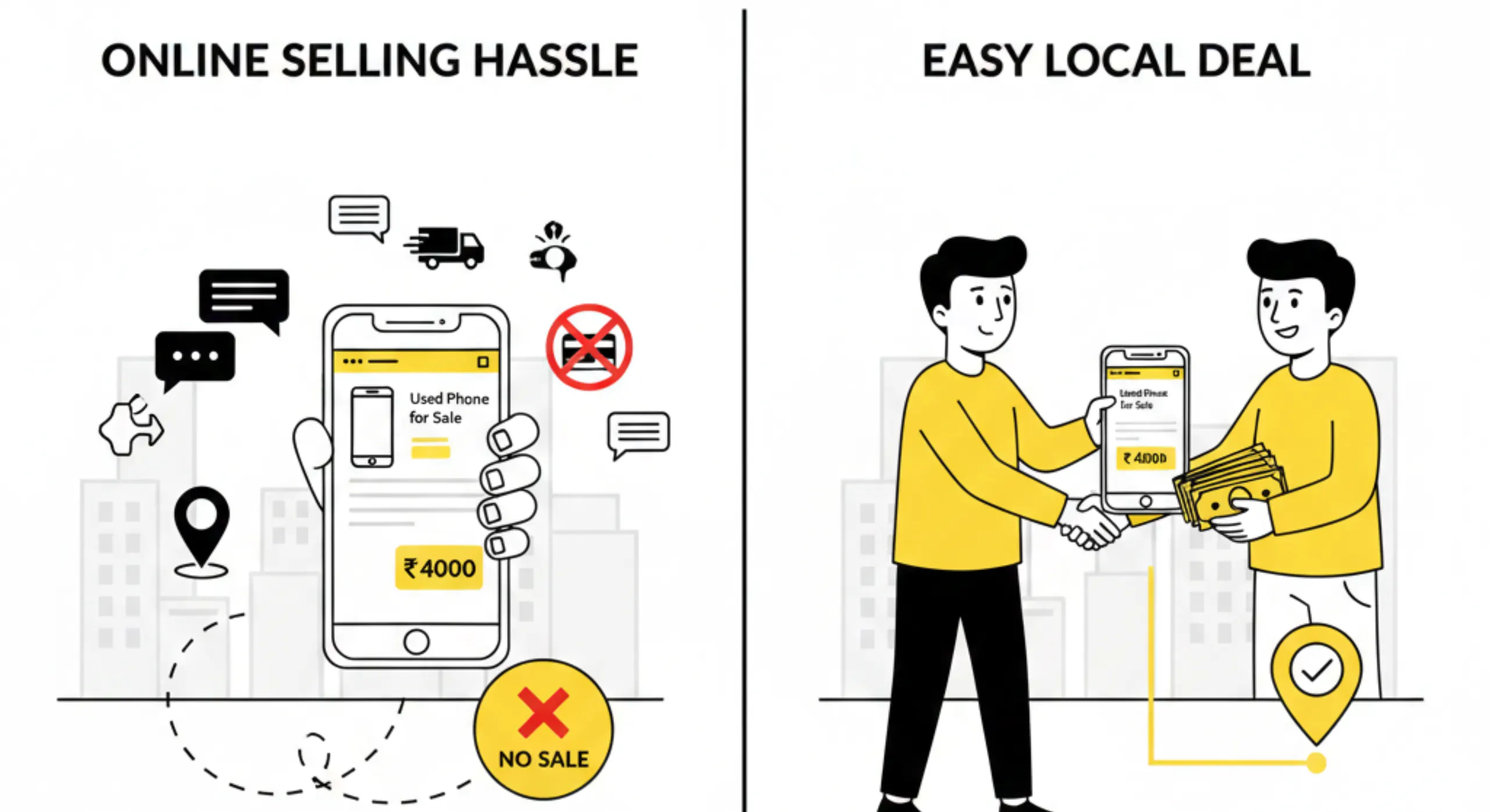
This simultaneous exchange is only possible in person. Remote transactions always involve a gap between payment and receipt, and that gap is where most of the risk in second-hand buying lives.
A seller who has been paid but not yet shipped has no practical incentive to hurry or to resolve problems that arise in transit. A buyer who has the item but not yet paid leaves the seller in an uncomfortable position. The face-to-face exchange eliminates both of these risk windows entirely.
Natural Accountability Between Buyer and Seller
When two people meet in person, the interaction is human in a way that chat messages are not. Both parties see each other. Both know the other is a real person in the same city. Both are aware that they could, in principle, encounter each other again.
This natural accountability changes behaviour. Sellers who meet buyers in person are more careful about the accuracy of their descriptions because the buyer will find any discrepancy immediately and respond in real time. Buyers who have agreed on a price and seen the item are less likely to back out of the deal or attempt last-minute renegotiation.
The human dimension of face-to-face transactions is not sentimental. It is a practical accountability mechanism that makes both parties behave more honestly.
How Face-to-Face Deals Play Out Across Common Categories in 2026
Smartphones and Laptops
These remain the most commonly traded items on Indian classifieds and also the ones where in-person verification matters most.
Battery health on a phone or laptop cannot be accurately assessed through video. Charging speed, the condition of ports, the integrity of the display under different angles, keyboard feel, speaker quality, the responsiveness of touch and biometric functions, all of these require physical presence to assess properly.
A buyer who visits a seller, tests the device on their own accounts and with their own charger, and checks the IMEI independently is in a completely different position from one who has watched a video demonstration.
In 2026, with phone prices at a significant level even in the second-hand market, this in-person verification is not excessive caution. It is basic due diligence.
Home Appliances and Furniture
For washing machines, refrigerators, air conditioners, and large furniture items, in-person inspection is not just preferable. For practical reasons, it is the only sensible approach.
These items cannot be returned if they turn out to be different from their description. Transport costs for large appliances are significant. The difference between a washing machine with a functional motor and one with a motor that will fail in three months is not visible in any photograph. Running the machine through a cycle in the seller’s presence is the only reliable test.
For furniture, the difference between solid wood construction and engineered wood that looks similar in photos, the soundness of joints and fittings, the actual colour and texture under normal light, all of these are revealed immediately in person and not reliably through any remote means.
Vehicles and Two-Wheelers
A test ride remains the definitive assessment of a second-hand two-wheeler’s condition. Engine sound under load, brake responsiveness, gear shift quality, handling feel, these are things that no video call can convey and no description can substitute for.
Document verification, comparing RC details with the seller’s ID, checking insurance validity, confirming chassis and engine numbers against the RC, these are all done in person at the time of inspection and cannot be reliably completed remotely.
In 2026, with vehicle fraud still a real risk on classified platforms, face-to-face transactions with proper document checks remain the standard that protects buyers.
Baby and Children’s Items
Parents buying second-hand items for their children are particularly careful, and rightly so. The structural integrity of a pram, the safety of a cot’s slat spacing, the condition of a cycle’s brakes, these are things that matter practically and cannot be assessed through photos alone.
Meeting the seller, seeing how they have kept the item, and checking it properly before paying gives parents the information they need to make a confident decision. Remote purchasing of safety-relevant baby items introduces an uncertainty that most careful parents are not comfortable with.
How Local Classifieds Make Face-to-Face Transactions Practical in 2026
The reason face-to-face deals remain the preferred transaction structure for most second-hand purchases is not nostalgia. It is practicality. And the reason they are practical is proximity.
When buyer and seller are in the same city, the same locality, or the same neighbourhood, the logistics of meeting in person are straightforward. A visit can happen the same day or the next. The seller does not need to block a significant portion of their day. The buyer does not need to arrange major travel.
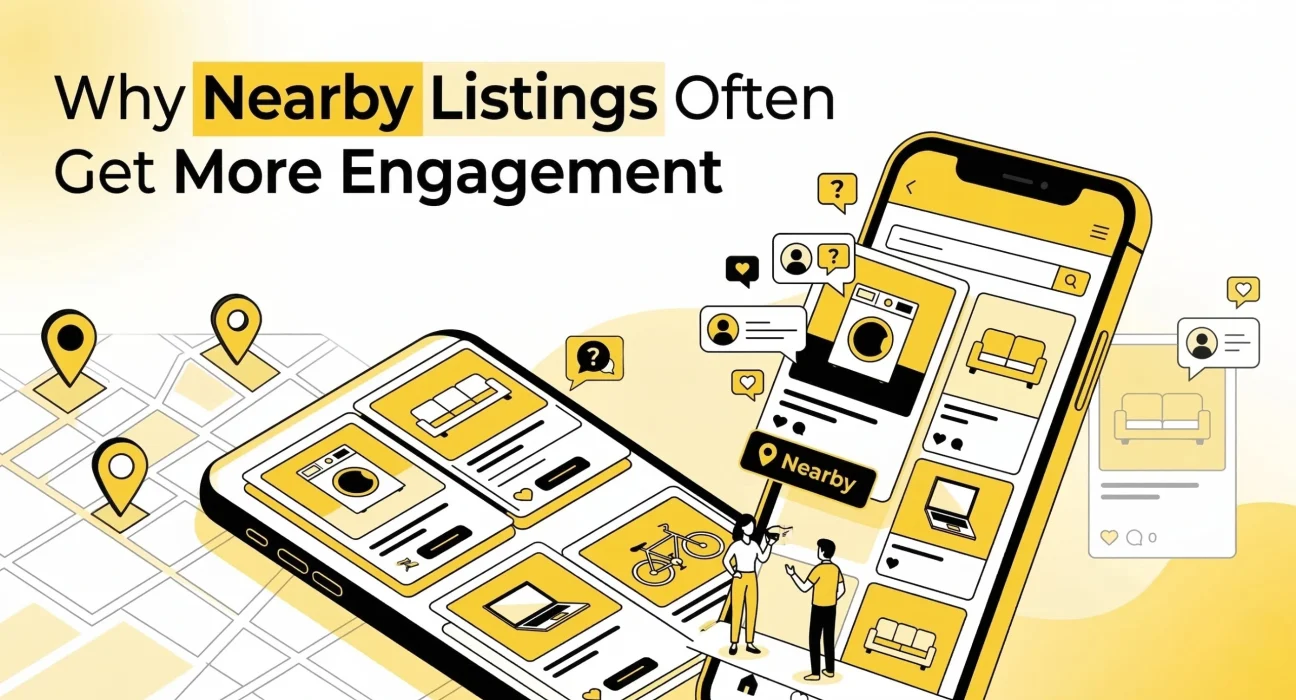
Platforms like Sympl that focus on connecting local buyers and sellers in the same city make face-to-face transactions the natural default rather than a special effort.
When you buy and sell locally through Sympl Classifieds:
- Sellers are close enough to visit today or tomorrow without significant time investment
- Buyers can inspect before committing to payment without the visit being a major logistical event
- Payment and handover happen together in a single meeting, eliminating the risk gap of remote transactions
- The transaction is between two real people in the same city who can follow up if needed
This is what distinguishes a platform built around local connections from one that happens to have some local listings buried in a national feed. The local-first design is what makes face-to-face transactions easy rather than exceptional.
Cost and Time Benefits of Face-to-Face Local Transactions
The financial and practical advantages of in-person deals remain consistent and real in 2026.
No post-purchase disputes from undisclosed issues. A buyer who has inspected properly and paid in person has seen everything relevant to their decision. Post-purchase complaints about conditions are rare from buyers who completed thorough in-person inspections. This saves both parties significant time and stress.
No shipping or delivery cost. For bulky items especially, the cost of delivery across any meaningful distance is substantial. A local face-to-face transaction where the buyer collects or the seller drops off nearby eliminates this cost entirely.
Faster transaction completion. A local inspection and same-day payment is faster than any remote transaction process involving shipping, transit, receipt, and delayed follow-up if there are issues.
Better prices through honest negotiation. In-person negotiation based on the actual item produces fairer outcomes for both sides. Sellers do not need to inflate prices to cover remote transaction risk. Buyers do not need to add a buffer for uncertainty about condition. The price reflects reality.
For anyone focused on low-cost buying or recovering value from unused items quickly, face-to-face local transactions offer consistently better financial outcomes than remote alternatives.
Who Benefits Most From Face-to-Face Local Deals in 2026
First-Time Buyers and Sellers
For someone approaching a classified transaction for the first time, the in-person format removes most of the anxiety. You see the item. You meet the person. You pay when you are satisfied. There is no leap of faith required.
Students Buying High-Value Items on Limited Budgets
A student buying a second-hand laptop on a tight budget cannot afford to get it wrong. An in-person inspection ensures they are paying for exactly what they think they are buying. Local classifieds make this inspection accessible without requiring a cross-city trip.
Families Buying Appliances and Furniture
Families making significant household purchases want to inspect before committing. The in-person transaction structure that local classifieds support is aligned with how families have always preferred to make these decisions.
Working Professionals Selling High-Value Items
Professionals selling cameras, phones, or branded equipment want buyers who are genuinely interested and can come and complete the transaction efficiently. Local buyers who meet in person provide this without the drawn-out back-and-forth that remote transactions require.
Anyone Who Values Certainty Over Convenience
There is a category of buyer and seller for whom knowing exactly what is being exchanged matters more than the convenience of a remote transaction. For these users, face-to-face deals are not a limitation. They are the preferred approach, and local classifieds are built to support it.
Conclusion:
Digital platforms have made it easier to find buyers and sellers. Video calls have improved remote inspection. Payment systems are faster and more reliable than ever.
None of this has changed the fundamental value of being in the same room as the item you are buying, with the person selling it, before you pay.
Face-to-face transactions in second-hand markets work because they give complete information, create natural accountability, and eliminate the risk gap between payment and receipt. These advantages are not dependent on the year. They are structural features of in-person exchange that technology improves around without replacing.
Sympl, among the Best Classified Sites in Hyderabad for local buying and selling, is built around making these face-to-face transactions as easy as possible. By connecting local buyers and sellers who are close enough to meet the same afternoon, the platform ensures that the simplest and most reliable transaction structure remains the default.
See it in person. Pay when satisfied. Take it home. In 2026, that is still how the best local deals work.