
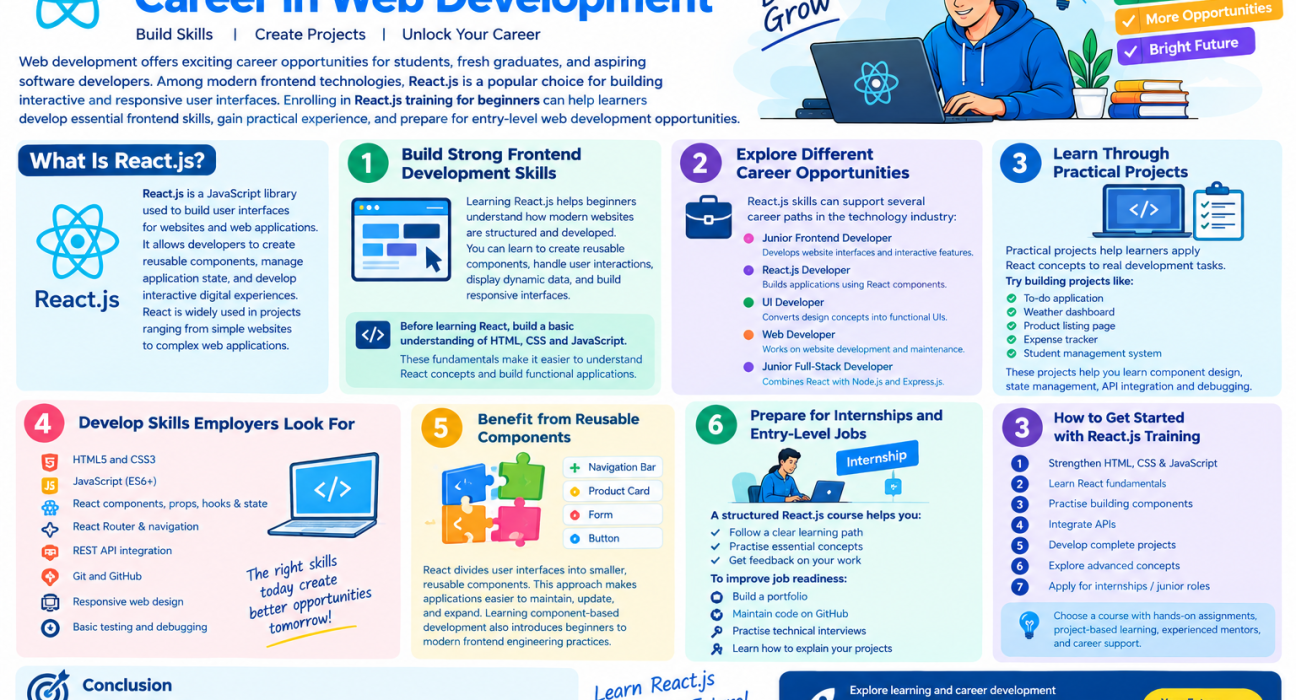
Web development offers exciting career opportunities for students, fresh graduates, and aspiring software developers. Among modern frontend technologies, React.js is a popular choice for building interactive and responsive user interfaces. Enrolling in React.js training for beginners can help learners develop essential frontend skills, gain practical experience, and prepare for entry-level web development opportunities.
What Is React.js?
React.js is a JavaScript library used to build user interfaces for websites and web applications. It allows developers to create reusable components, manage application state, and develop interactive digital experiences. React is widely used in projects ranging from simple websites to complex web applications.
1. Build Strong Frontend Development Skills
Learning React.js helps beginners understand how modern websites are structured and developed. Students can learn to create reusable components, handle user interactions, display dynamic data, and build responsive interfaces.
Before learning React, beginners should develop a basic understanding of HTML, CSS, and JavaScript. These fundamentals make it easier to understand React concepts and build functional applications.
2. Explore Different Career Opportunities
React.js skills can support several career paths in the technology industry, including:
- Junior Frontend Developer: Develops website interfaces and interactive features.
- React.js Developer: Builds applications using React components and related tools.
- UI Developer: Converts design concepts into functional user interfaces.
- Web Developer: Works on website development, maintenance, and improvements.
- Junior Full-Stack Developer: Combines React with backend technologies such as Node.js and Express.js.
The roles available to beginners depend on their technical knowledge, project experience, and the requirements of individual employers.
3. Learn Through Practical Projects
Practical projects help learners apply React concepts to real development tasks. During React.js training for beginners, students can practise by creating a to-do application, weather dashboard, product listing page, expense tracker, or student management system.
These projects help learners understand component design, state management, API integration, and debugging. Completing and documenting projects also helps students build a portfolio to showcase during job applications and interviews.
4. Develop Skills Employers Look For
React.js is most useful when combined with other essential development skills. Beginners should focus on learning:
- HTML5 and CSS3
- JavaScript fundamentals and ES6+ features
- React components, props, hooks, and state
- React Router and application navigation
- REST API integration
- Git and GitHub
- Responsive web design
- Basic testing and debugging
Understanding these concepts helps learners develop more complete applications and prepare for practical coding assessments.
5. Benefit from Reusable Components
React encourages developers to divide user interfaces into smaller, reusable components. For example, a website can use separate components for navigation bars, product cards, forms, and buttons.
This approach makes applications easier to maintain, update, and expand. Learning component-based development also introduces beginners to an important concept used in modern frontend engineering.
6. Prepare for Internships and Entry-Level Jobs
A structured React.js course can help beginners follow a learning path, practise essential concepts, and receive feedback on their work. Internships and practical assignments can provide additional opportunities to understand development workflows and collaborate with others.
To improve job readiness, learners should create a portfolio, maintain their code on GitHub, practise technical interview questions, and prepare to explain how their projects work.
How to Get Started with React.js Training
Beginners can start by strengthening their HTML, CSS, and JavaScript knowledge. They can then learn React fundamentals, practise building components, integrate APIs, and develop complete projects. Once comfortable with the basics, they can explore advanced concepts and apply for suitable internships or junior developer positions.
When choosing React.js training for beginners, look for hands-on assignments, project-based learning, experienced mentors, and career preparation support.
Conclusion
React.js is a valuable technology for learners who want to pursue a career in frontend or full-stack web development. By learning its core concepts, building practical projects, and strengthening JavaScript fundamentals, beginners can develop skills relevant to modern web development.
If you are ready to begin your technology career, explore learning and career development opportunities at CareerCircle and take the next step toward developing your web development skills.