

When enterprise software projects fail, they rarely fail because of bad code. They fail because the software doesn’t align with how the business actually works.
This disconnect shows up everywhere. In banking systems where the product catalog can’t handle regional variations. In manufacturing ERPs where the procurement module fights with finance over what a “vendor” means. In insurance platforms where claims processing logic is scattered across twelve different services because no one agreed on what a claim actually is.
Domain-Driven Design, or DDD, addresses this gap. It’s not a technology choice or a framework. It’s a disciplined approach to building software that mirrors the business domain it serves. For C-level executives overseeing large transformation programs, understanding DDD matters because it directly impacts delivery timelines, system maintainability, and whether your technology investments will still make sense three years from now.
Why Enterprise Software Projects Struggle at Scale
Most large organizations have experienced this pattern. A digital transformation program starts with clear objectives. Six months in, the delivery team is building features the business didn’t ask for. Twelve months in, simple changes take weeks because the codebase has become tangled. Eighteen months in, you’re discussing a rewrite.
The root cause is usually the same. Teams build software without a shared understanding of the business domain. Developers interpret requirements through a technical lens. Business stakeholders assume their processes will translate directly into system behavior. The gap between these perspectives grows wider as the system grows larger.
In India’s enterprise landscape, this problem intensifies. Regulatory requirements change frequently. Business models vary significantly across regions and customer segments. Legacy systems from multiple vendors need to coexist. A payments company might need to handle UPI, cards, net banking, and wallets while complying with RBI guidelines that evolve every quarter. If the core domain model can’t accommodate this complexity, every change becomes expensive and risky.
The cost shows up in multiple ways. Change requests that should take days take months. Testing becomes a nightmare because no one fully understands the dependencies. New team members need months to become productive. Business opportunities are missed because the technology can’t adapt quickly enough.
What Domain-Driven Design Actually Means
DDD starts with a simple premise. The software should reflect the business domain as closely as possible. Not the database structure. Not the API design. The actual business concepts, rules, and workflows that matter to your organization.
This means developers and business experts must work together to build a shared language. When everyone talks about “orders,” they need to mean the same thing. When someone mentions “customer eligibility,” the rules should be explicitly defined and consistently applied across the system.
The practical application involves several key practices. Bounded contexts separate different parts of the business domain. An “order” in the sales context might be different from an “order” in the fulfillment context, and that’s acceptable as long as the boundaries are clear. Aggregates ensure that business rules are enforced consistently. Entities and value objects model business concepts accurately rather than just storing data.
For executives, the value proposition is straightforward. Systems built with DDD principles are easier to understand, easier to change, and more aligned with business needs. When market conditions shift or regulations change, the code can adapt because it was built around business concepts rather than technical abstractions.
The Execution Challenge in Large Enterprises
Implementing DDD in a large enterprise is not primarily a technical challenge. It’s an organizational one.
The first obstacle is usually culture. In many organizations, business and technology teams operate in separate worlds. Business writing requirements. Technology builds systems. This handoff model makes DDD nearly impossible because DDD requires ongoing collaboration and shared understanding.
The second obstacle is governance. Large enterprises have established processes for requirements gathering, design reviews, testing, and deployment. Introducing DDD means changing these processes. It means accepting that requirements will evolve as the domain model becomes clearer. It means investing time in domain modeling workshops instead of rushing into implementation.
The third obstacle is skill. Most development teams haven’t practiced DDD. They understand databases, APIs, and frameworks. They don’t necessarily know how to model business domains effectively or how to facilitate domain modeling sessions with business experts. Building this capability takes time and deliberate effort.
The fourth obstacle is vendor management. Many enterprise projects involve multiple vendors and system integrators. Each vendor has their own methodology and preferences. Ensuring consistent application of DDD principles across vendor teams requires strong governance and clear architectural standards.
These challenges are why many enterprise DDD initiatives start well but gradually dilute. Initial enthusiasm gives way to deadline pressure. Domain modeling sessions get skipped. Bounded contexts blur. Within a year, you’re back to building a tangled system that’s difficult to maintain.
What Actually Works in Enterprise DDD Programs
Successful enterprise implementations of DDD share certain characteristics. They’re not about following a textbook. They’re about adapting the principles to organizational reality while maintaining discipline where it matters.
First, executive sponsorship matters more than technical excellence. If the CIO or CTO doesn’t understand why domain modeling is worth the time investment, middle management will deprioritize it when deadlines approach. Sponsors need to be educated on the long-term benefits and prepared to defend the approach when stakeholders question why delivery seems slower initially.
Second, start with the most critical business domains. Don’t try to apply DDD everywhere at once. Identify the core domains where business differentiation happens and complexity is highest. Apply rigorous DDD practices there. For supporting domains and generic functions, lighter approaches often suffice.
Third, invest in domain modeling capability. This usually means bringing in experienced practitioners who can facilitate modeling sessions, mentor teams, and establish patterns. It might also mean training business analysts to think about domain models rather than just feature lists. This capability building cannot be outsourced entirely. The organization needs internal expertise to sustain the approach.
Fourth, make bounded contexts explicit in your architecture and organization. If your domain analysis identifies distinct contexts, they should be reflected in system boundaries and ideally in team structures. Conway’s Law applies here. Your system architecture will mirror your communication patterns whether you intend it to or not.
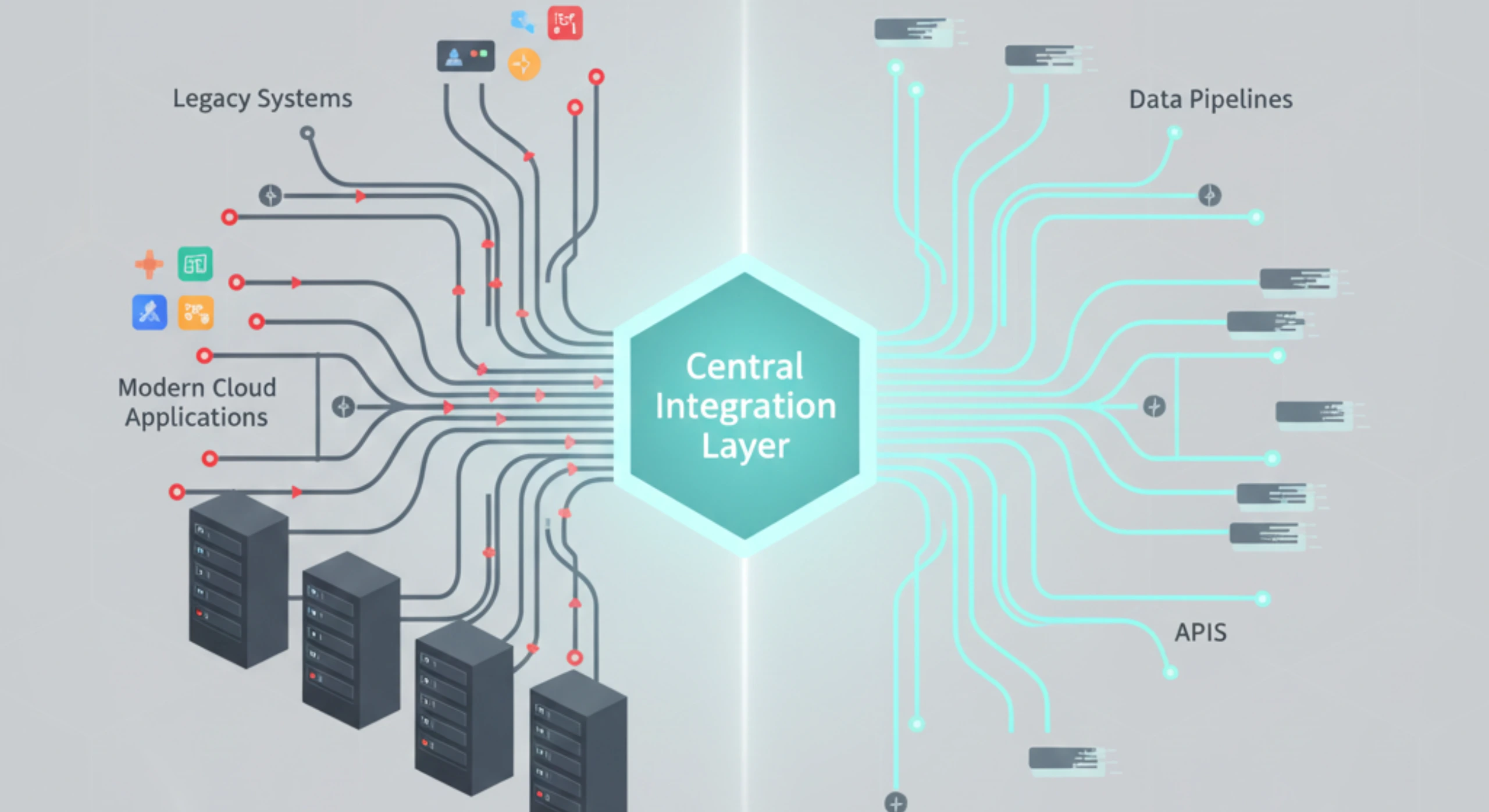
Fifth, recognize that legacy systems will persist. Most large enterprises cannot rewrite everything at once. The practical question is how new systems built with DDD principles will coexist with legacy platforms. Anti-corruption layers and careful context mapping become essential. The goal isn’t purity. It’s a pragmatic improvement over time.
Partners like Ozrit understand this reality. Enterprise delivery at scale requires balancing architectural ideals with organizational constraints, vendor dynamics, and business timelines. The firms that succeed in this space are those that bring domain modeling discipline while remaining pragmatic about execution.
Governance, Risk, and Long-Term Sustainability
For C-level executives, DDD connects directly to governance and risk management. Poorly structured enterprise software creates multiple risk categories that boards and audit committees increasingly scrutinize.
Operational risk increases when business logic is scattered and inconsistent. A lending platform where credit decisioning rules are duplicated across multiple services becomes a compliance nightmare. Every rule change must be synchronized across systems, increasing the probability of errors.
Compliance risk intensifies in regulated industries. Banking, insurance, healthcare, and fintech companies face detailed regulatory requirements. When the codebase doesn’t clearly represent regulatory concepts, proving compliance becomes difficult. Auditors struggle to trace how regulations are implemented. Proving that a change hasn’t introduced regulatory violations takes extensive testing.
Technology risk grows as systems become unmaintainable. Every organization carries technical debt. The question is whether that debt is manageable or whether it’s compounding to the point where the system becomes a liability. DDD reduces this risk by keeping the codebase aligned with business logic. Changes remain localized. New developers can understand the system by understanding the business domain.
Vendor dependency risk matters particularly in India’s enterprise market. Many organizations rely heavily on system integrators and product companies. If the system structure doesn’t make business sense, knowledge becomes locked in individual vendor teams. Switching vendors or bringing work in-house becomes prohibitively difficult. A well-structured domain model makes the system more transparent and reduces this lock-in.
From a sustainability perspective, DDD supports longer system lifespans. Enterprise platforms need to evolve for five, ten, or fifteen years. Systems built without clear domain models typically hit a complexity ceiling within three to five years, forcing expensive rewrites. Systems built with DDD principles can evolve incrementally because changes align with business concepts rather than technical implementation details.
Making DDD Work in Your Organization
For executives considering DDD for their transformation programs, several practical steps can improve outcomes.
Start by assessing the current state honestly. How well do your technology teams understand the business domain? How much collaboration happens between business and technology? How consistently are business concepts represented across systems? These questions reveal readiness.
Educate leadership on what DDD requires. This includes time for domain modeling, investment in capability building, and acceptance that requirements will evolve. Setting these expectations early prevents unrealistic pressure later.
Select appropriate pilots. Choose business domains where complexity is high and business value is clear. Avoid the temptation to pilot in peripheral areas where success won’t prove much. Core business domains provide the best test cases.
Establish clear architecture standards. Define how bounded contexts will be implemented, how aggregates should be structured, and what patterns teams should follow. This governance prevents each team from interpreting DDD differently.
Build internal capability deliberately. Bring in experienced practitioners, but ensure knowledge transfer happens. Your architects, senior developers, and business analysts need to internalize these practices. External expertise should augment, not replace, internal capability.
Create feedback loops between business and technology. Regular domain modeling sessions, joint planning, and collaborative refinement should become standard practice. This isn’t a one-time exercise. It’s an ongoing discipline.
Measure what matters. Track metrics like time to implement changes, defect rates in modified code, and how long new developers take to become productive. These indicators reveal whether domain-driven practices are delivering value.
The Partnership Question
Large transformation programs rarely succeed without strong delivery partners. The question isn’t whether to engage partners but how to choose them.
Traditional system integrators often struggle with DDD because their delivery models assume fixed requirements and linear execution. DDD requires iteration, collaboration, and domain expertise. Partners who excel in enterprise DDD delivery combine technical capability with business domain understanding and process maturity.
Ozrit’s approach to enterprise program execution reflects this reality. Successful delivery at scale requires more than development resources. It requires understanding the business domain deeply, establishing collaborative practices between business and technology teams, and maintaining architectural discipline across long delivery timelines. This combination of business alignment and execution maturity separates sustainable enterprise delivery from projects that deliver features but fail to deliver business value.
When evaluating partners, look beyond technology skills. Can they facilitate domain modeling effectively? Do they have experience managing complex stakeholder environments? Can they navigate vendor ecosystems? Do they bring governance frameworks that work in large organizations? These capabilities matter as much as coding ability.
What This Means for Digital Transformation
Digital transformation has become somewhat of a cliché in enterprise circles. Everyone claims to be doing it. Few succeed in ways that materially change business performance.
DDD connects directly to transformation success because transformation is fundamentally about changing how business operates. If your technology doesn’t reflect business operations accurately, transformation efforts will struggle. You’ll build digital interfaces on top of dysfunctional business logic. The user experience might improve, but underlying problems persist.
Real transformation requires reimagining business domains and encoding that vision in software. This is what DDD enables. It forces explicit conversations about how the business should work, not just how it currently works. It makes assumptions visible. It creates a platform for evolution rather than just automation of existing processes.
For Indian enterprises competing globally, this capability becomes a differentiator. Markets are changing rapidly. Customer expectations are rising. Regulatory environments are complex. Organizations that can evolve their technology platforms quickly and reliably will outcompete those locked into rigid systems.
Moving Forward
Domain-Driven Design isn’t a magic solution. It’s a disciplined approach that requires commitment, capability, and time to deliver value. For C-level executives, the decision to adopt DDD should be based on honest assessment of organizational needs and readiness.
If your enterprise is undertaking significant transformation, building new platforms, or struggling with unmaintainable legacy systems, DDD deserves serious consideration. The upfront investment in domain modeling and capability building pays dividends in reduced maintenance costs, faster time to market for changes, and better alignment between technology and business strategy.
Success requires more than technical implementation. It requires organizational change, leadership commitment, and partners who understand enterprise realities. The firms that navigate this successfully build technology platforms that serve their business for years rather than becoming liabilities within months.
The choice isn’t really between DDD and some other approach. It’s between building software that mirrors your business domain or building software that fights against it. One path leads to sustainable technology platforms. The other leads to expensive rewrites and missed opportunities.
The question for leaders is which path your organization will choose and whether you have the discipline to stay on it when pressure increases and shortcuts become tempting. That discipline, more than any technical practice, determines whether enterprise software initiatives deliver lasting value.