A fintech user rarely completes their journey in one step. They download a lending app, start a loan application, and then stop halfway through KYC. Or they sign up for a neobank account and never activate it. This drop-off is one of the biggest revenue leaks in Indian fintech. It’s exactly the gap a fintech CRM closes.
A fintech CRM is telecalling and lead management software built for how fintech businesses actually sell and onboard. It helps teams call fast, track KYC and activation stages, and follow up until a signup becomes a transacting customer. Businesses evaluating this kind of system should look at how a telecalling CRM for fintech structures itself around onboarding stages instead of generic sales stages. That difference matters more than most feature lists suggest.
This article explains what a fintech CRM actually does. It covers why generic CRMs fall short for lending, payments and neobank teams, and what to look for before choosing one.
What Is a Fintech CRM?
A fintech CRM is a customer relationship management system built for financial technology companies. This includes lending apps, neobanks, payment platforms, insurtech and wealth-tech businesses that sell or onboard users through outbound calls.
Unlike a generic sales CRM, a fintech CRM tracks a lead through onboarding milestones such as KYC started, KYC completed and account activated. It goes beyond generic stages like “contacted” or “closed.” It combines an auto dialer, lead management, compliance checks and pipeline tracking into one workflow built around this journey.
Why Fintech Sales and Onboarding Are Different
Most CRMs handle a simple sales funnel: lead, contacted, negotiation, won. Fintech onboarding does not work that way.
A person applying for a personal loan or opening a neobank account moves through a longer, more regulated path:
- App signup or enquiry the first point of contact, often from an ad or aggregator
- KYC initiation document upload, PAN and Aadhaar verification begins
- KYC completion verification is done, but the account is not yet active
- Activation the user makes their first transaction, deposit or draw-down
- Ongoing engagement or dormancy the user either keeps transacting or goes silent
A generic CRM has no concept of “KYC Started” or “Activated.” Sales teams end up tracking this in spreadsheets alongside the CRM, which defeats the purpose of having one system of record.
Telecalling teams in fintech also work under time pressure. Interest in a loan or account peaks in the first few minutes after signup. Every hour of delay in the first call measurably reduces the chance of contact and conversion. That’s why speed-to-lead matters more here than in most other industries.
Core Capabilities a Fintech CRM Needs
Not every feature matters equally for fintech telecalling teams. These are the ones that directly affect conversion and compliance.
1. Auto Dialer With Instant Lead Queuing
When a user signs up on an app or fills a loan enquiry form, the lead should queue for a call immediately. It shouldn’t sit in a spreadsheet waiting for someone to import it. An auto dialer that pulls new leads into the calling queue automatically closes this gap. Agents move from one call to the next without manually dialing numbers, which keeps talk time high during peak signup hours.
2. Onboarding-Stage Pipeline
Instead of “New, Contacted, Won,” the pipeline should reflect the actual fintech journey: Lead, KYC Started, KYC Done, Activated, Transacting, and Dormant or Lost. This lets a sales or operations manager see exactly where users are getting stuck without exporting data to Excel.
3. Lead Fields Built for Fintech
Generic contact fields (name, email, city) are not enough. A fintech CRM should let agents log details relevant to the product. This includes which product the lead applied for, current onboarding stage, KYC status, whether the app is installed, and the original lead source. This makes reporting and filtering meaningful for a lending or payments business.
4. DNC and Compliance Handling
TRAI regulations and Do Not Call (DNC) registrations in India closely govern financial services calling. A fintech CRM should automatically skip DNC-listed numbers and maintain a call and consent trail, reducing compliance risk for the business.
5. Deal Value and Revenue Pipeline
For lending and payments businesses, every lead has an underlying value: a loan amount, an average transaction size, or a subscription value. Tracking this against pipeline stage helps leadership see open pipeline value, win rate, and average deal size, not just call counts.
6. Follow-Up Scheduling and Reminders
A large share of fintech users who drop off during KYC will complete it if someone follows up at the right time. Automated callback reminders and overdue alerts flag a lead stuck at “KYC Started” for three days, instead of letting it quietly fall off the list.
7. WhatsApp and SMS for Nudges
Many fintech users respond faster to a WhatsApp message with a KYC link than to a cold call. Built-in WhatsApp templates and SMS let agents send quick nudges – document reminders, activation links, offer details – straight from the same workspace where they’re calling.
8. Real-Time Reporting and Team Visibility
Sales and operations leaders in fintech need to see conversion rates by lead source, agent, and onboarding stage in real time. This matters especially when campaigns run across Facebook Ads, Google Ads, or aggregator portals. A live dashboard or war-room view shows who’s calling, who’s idle, and today’s activations. This helps managers course-correct the same day, not at month-end.
Real-World Fintech Use Cases
These examples illustrate how the categories above play out in practice. They are illustrative scenarios, not case studies of specific businesses.
Lending apps: A digital lending platform receives loan applications through its app and through aggregator sites. A fintech CRM can route these applications to agents instantly and track each applicant through KYC. It can also flag anyone who has completed KYC but hasn’t yet gotten approval for disbursal, so the team can chase the final step instead of losing the deal at the finish line.
Neobanks and payment apps: A neobank often sees a large gap between app signups and users who actually complete KYC or make a first deposit. Outbound calling focused specifically on this stuck segment recovering signup drop-offs can convert a meaningful share of otherwise-lost users.
Insurtech and wealth-tech: Renewal reminders, policy or investment enquiry follow-ups, and KYC-linked onboarding calls follow a similar pattern. Timely outreach at the right stage matters more than call volume alone.
Reactivation campaigns: Teams can upload users who signed up but went dormant transacted once and stopped, or never transacted at all as a list. Agents call them with a specific win-back script, using dispositions to track who re-engages.
Common Mistakes Fintech Teams Make
- Treating every lead the same. A user who has completed KYC and one who just signed up need different call scripts and different urgency. Segmenting by onboarding stage avoids wasted calls.
- Delaying the first call. Even a one-hour delay after signup can significantly reduce contact and conversion rates. Auto-dialing new leads immediately avoids this.
- Ignoring DNC compliance. Calling DNC-registered numbers or not maintaining a consent trail creates real regulatory risk for financial services businesses.
- Not tracking deal value. Counting calls and leads without tracking the attached loan amount, transaction value, or subscription value makes it hard to prioritise high-value applicants.
- Losing dormant users silently. Without a reactivation workflow, users who stall at KYC or never transact simply disappear from view instead of getting a callback.
How TeleCalling CRM Supports Fintech Teams
TeleCalling CRM includes a pipeline built around the fintech onboarding journey: Lead, KYC Started, KYC Done, Activated, Transacting, and Dormant or Lost. It tracks deal value at every stage. New signups from app webhooks, Zapier, Facebook and Google Ads, or a Google Sheet land in the pipeline automatically. The system deduplicates them and assigns them to an agent.
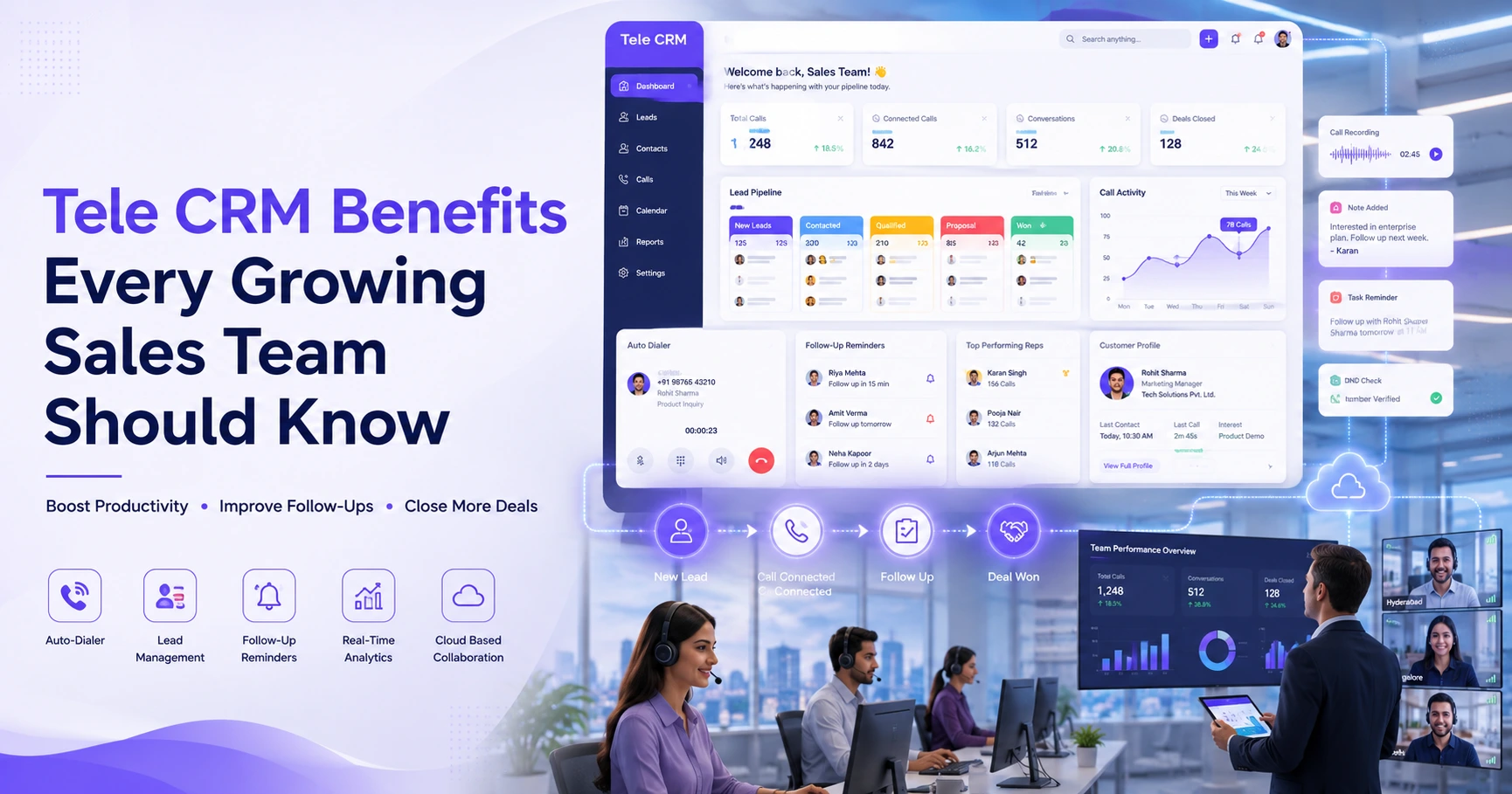
The auto dialer queues each new lead for calling right away and skips DNC numbers automatically. Agents can log fintech-specific details on every call, including product, onboarding stage, KYC status, and whether the app is installed. A live war room shows agent activity, talk time and today’s conversions in real time. Follow-up reminders make sure a lead stuck mid-KYC gets a callback instead of going cold.
Teams that want to see how these pipeline stages and lead fields work in practice can review the fintech CRM setup in more detail. This includes how leads flow in from common fintech lead sources.
Frequently Asked Questions
What makes a CRM a “fintech CRM” instead of a regular CRM? A fintech CRM tracks users through onboarding milestones like KYC status and activation, not just generic sales stages. It also typically includes DNC compliance handling and deal-value tracking suited to loan amounts or transaction values. Most generic CRMs don’t offer this out of the box.
Can a fintech CRM automatically call new app signups? Yes, if it supports webhook or Zapier integration. New signups from your app or website can flow into the CRM and queue for an auto dialer to call immediately. This reduces the delay between signup and first contact.
Is DNC compliance built into telecalling software, or does it need a separate tool? Good telecalling software for fintech includes DNC list management directly, automatically skipping registered numbers during auto-dialing. Businesses should confirm the vendor includes this by default rather than sells it as a paid add-on.
Can a fintech CRM track loan amount or deal value per lead? Yes, most fintech-focused CRMs let agents attach a deal or loan value to each lead and track it through the pipeline. This gives managers visibility into open pipeline value and win rate, not just call volume.
How is a fintech CRM different from a loan DSA CRM? They overlap significantly. A loan DSA CRM usually focuses on loan disbursal workflows for direct selling agents. A broader fintech CRM also covers neobanks, payment apps, and insurtech use cases with a wider onboarding pipeline.
Do fintech companies need a mobile app for their telecalling CRM? It helps, especially for field or hybrid sales teams. A mobile app lets agents call, log outcomes and check follow-ups without being tied to a desktop. This matters for fintech teams that also do in-person KYC verification or field visits.
Can the same CRM re-engage dormant or inactive fintech users? Yes. Teams can upload dormant-user lists and call them through a reactivation campaign using the auto dialer. Call outcomes get logged the same way as new leads, so win-back efforts stay tracked alongside regular pipeline activity.
Conclusion
Fintech businesses lose more revenue to slow follow-up and stalled onboarding than most teams realise. A generic CRM or a spreadsheet can’t show where a KYC-in-progress user is stuck. A manual dialer can’t call a new signup fast enough to catch them while interest is high.
A fintech CRM solves this by combining an auto dialer, an onboarding-stage pipeline, DNC compliance and deal-value tracking into one workflow. Businesses that want to see this applied to lending, neobank or payments use cases can explore lead management software built for fintech teams. They can evaluate whether it fits their onboarding funnel before switching.