
Starting a career can be challenging for fresh graduates, especially when many entry-level jobs require practical experience. Although academic qualifications provide a strong foundation, employers also look for candidates who can apply their knowledge, solve problems, communicate effectively, and work in a professional environment. Choosing the right internship program for freshers is an important step toward developing these skills and preparing for future employment.
An internship allows freshers to explore their chosen career path, gain hands-on experience, and understand how companies operate. However, not every internship offers the same learning opportunities. Before applying, it is important to evaluate the training structure, project experience, mentorship, and career support offered by the program.
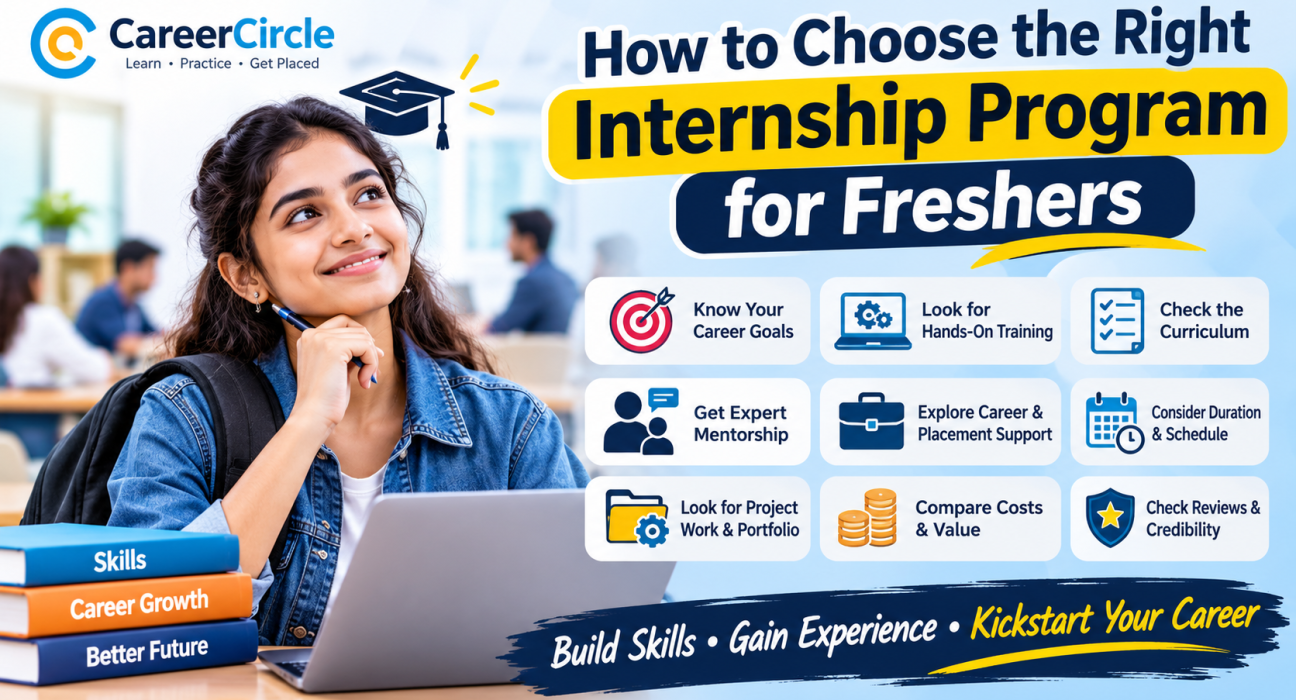
1. Identify Your Career Goals
Before selecting an internship, identify your interests and the type of role you want to pursue. For example, if you are interested in software development, look for programs that cover web development, programming, databases, or application development. If you prefer creative or business-oriented roles, consider opportunities in digital marketing, UI/UX design, or related fields.
Having a clear career goal helps you select an internship that aligns with your interests and long-term professional plans. It also allows you to focus on learning the skills most relevant to your desired job.
2. Look for Practical, Hands-On Training
One of the most important factors to consider is whether the internship provides practical experience. Programs that focus only on theoretical lessons may not give you enough opportunities to understand real workplace challenges.
Look for an internship that includes assignments, practical exercises, collaborative projects, and opportunities to build a portfolio. For technology-related roles, working on real-world applications can help you understand development workflows, debugging, testing, and project delivery.
Practical experience also gives you concrete examples to discuss during job interviews.
3. Evaluate the Training Curriculum
A well-structured internship should have a clear learning path. Before enrolling, review the curriculum to understand what you will learn, how the sessions are organised, and whether the topics match current industry requirements.
For example, aspiring developers may benefit from learning technologies such as React, Next.js, Node.js, Python, Django, or Java, depending on their chosen career path. Students interested in other fields should look for relevant tools and industry-specific skills.
A good curriculum should help you progress from foundational concepts to practical applications, with clear learning objectives at every stage.
4. Check the Quality of Mentorship
Guidance from experienced professionals can make a significant difference in your learning experience. Mentors can help you understand complex concepts, review your work, identify mistakes, and develop better problem-solving habits.
When comparing internship programs, check whether they offer regular feedback, doubt-clearing sessions, individual guidance, or project reviews. Mentorship can help freshers gain confidence and understand professional expectations more effectively.
5. Understand Career and Placement Support
For many graduates, an internship is not just a learning opportunity; it is also a step toward securing their first job. Therefore, it is useful to understand what career support is included in the program.
Look for services such as resume preparation, interview practice, career counselling, job referrals, and access to potential hiring opportunities. If a program advertises placement assistance or a job guarantee, read the eligibility requirements, performance conditions, and terms carefully before enrolling.
For example, CareerCircle offers structured technology training, hands-on project experience, expert mentorship, and career support. Its website describes a 12-week program designed to help learners develop industry-relevant skills and pursue employment opportunities.
Exploring programs like CareerCircle can help freshers understand how practical training and career guidance can be combined within a structured learning journey.
6. Review the Internship Duration and Schedule
The duration of an internship should provide enough time to learn new concepts, complete assignments, and practise relevant skills. A very short program may offer limited exposure, while a longer program should provide meaningful learning opportunities throughout its duration.
Check whether the schedule suits your availability and whether the program includes regular assessments, project milestones, and progress reviews. If you are still studying, consider how the internship will fit around your academic commitments.
The goal is to choose a program that balances learning, practice, and career preparation.
7. Examine Project Work and Portfolio Opportunities
A strong internship should help you demonstrate what you have learned. Projects allow you to apply technical or professional knowledge to specific tasks and build evidence of your capabilities.
For example, a web development fresher might create a responsive website, develop a dashboard, or build a small full-stack application. A digital marketing intern might prepare a content strategy, conduct keyword research, or analyse campaign performance.
Whenever possible, choose a program that allows you to document your contributions and showcase completed work in a professional portfolio. These examples can strengthen your resume and help recruiters assess your skills.
8. Compare Program Costs and Overall Value
Before joining an internship, understand the total cost and what is included. Some programs may charge fees for training, mentorship, project support, or placement assistance.
Compare the curriculum, learning resources, mentor access, project opportunities, and career services rather than making a decision based only on price. Ask about additional charges, refund policies, and any conditions attached to placement claims.
A transparent program should clearly explain its fees, services, expectations, and outcomes.
9. Research Reviews and Program Credibility
Take time to research the organisation offering the internship. Review its official website, program details, mentor profiles, and available student experiences. If possible, speak with former participants to understand the quality of training and the support they received.
Be cautious of vague promises, unclear fee structures, or guaranteed employment claims that do not include written terms. Verify important details before sharing sensitive information or making payments.
Making an informed decision can help you avoid unsuitable programs and focus on opportunities that support your career goals.
Why Choosing the Right Internship Matters
The right internship can help freshers develop practical skills, improve communication, understand workplace expectations, and build professional confidence. It can also help them identify their strengths and areas that need improvement before entering the job market.
A well-chosen program combines structured learning with practical assignments, constructive feedback, and appropriate career guidance. These experiences can make the transition from education to employment more manageable.
Conclusion
Choosing the right internship program for freshers requires careful consideration of your career goals, curriculum, practical projects, mentorship, program duration, costs, and placement support. Instead of selecting an internship based only on its certificate or promotional claims, focus on the actual skills and experience you will gain.
If you are planning to start a career in technology, explore the programs available at CareerCircle. Review its training approach, project opportunities, and career support to determine whether they align with your professional goals.
Take the first step toward your career by selecting an internship that helps you learn, build practical experience, and prepare for future job opportunities.