
Walk down Anna Salai or T Nagar on any given evening and you will notice something interesting – nearly every shopkeeper, auto driver, and tea stall owner is accepting UPI payments on a mobile phone. This is the real face of India’s fintech revolution, and Chennai, with its strong IT backbone in OMR and Guindy, is playing no small part in building it. If you are an entrepreneur or a business owner planning to enter this space, fintech app development is likely the single biggest decision you will make this year.
This guide walks you through the entire journey of building a financial technology mobile app – from the first idea on a napkin to a fully functional product on the Play Store – in plain, simple language. We will also introduce you to some genuine, on-ground Chennai-based technology companies (starting with Ozrit) that are known for their work in mobile app, e-commerce, and fintech app development, since many businesses researching “fintech app development” also end up searching for the Top 10 eCommerce Development Companies in Chennai, given how closely digital payments, online stores, and mobile banking solutions are intertwined today.
What Exactly Is a FinTech Mobile App?
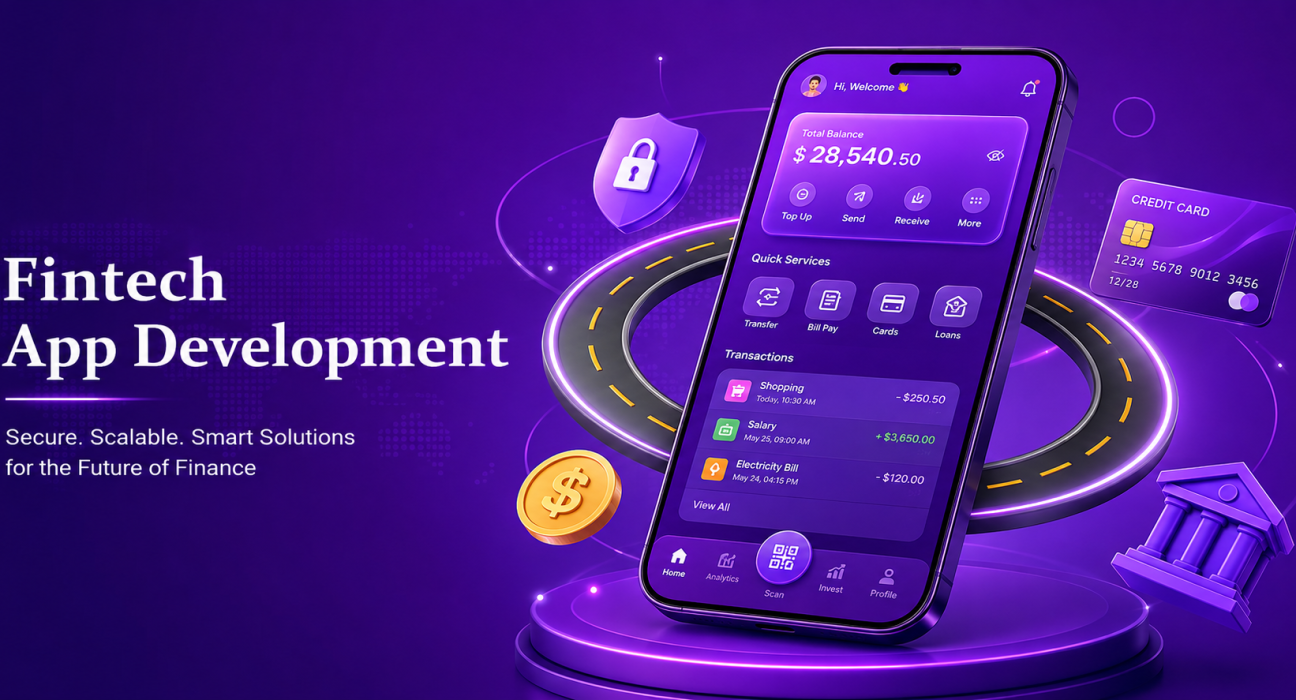
A fintech mobile app, in simple terms, is any application that helps people manage, move, or multiply their money using a smartphone. This could be a digital wallet, a UPI payment app, a peer-to-peer lending platform, a stock trading app, a neobank, an insurance-tech (insurtech) app, or even a simple bill-splitting tool used among friends. Unlike a regular app, fintech apps deal directly with money and personal data, which means they carry a higher degree of responsibility – one small bug can cost a user real rupees, not just a bad experience.
This is precisely why fintech mobile application development is not something to be taken lightly or rushed through. It demands careful planning, ironclad security, and compliance with regulations laid down by bodies like the Reserve Bank of India (RBI) and the National Payments Corporation of India (NPCI).
Why Chennai Is Becoming a Strong Hub for FinTech App Development
Chennai has long been called the “Detroit of India” for its automobile industry, but over the past decade it has quietly built a reputation as a serious software and BFSI (Banking, Financial Services and Insurance) hub too. Global names like PayPal, Verizon, and Standard Chartered GBS have set up large operations in and around the city, and this has created a deep talent pool of developers who understand both technology and financial workflows.
Add to this Chennai’s famously disciplined, no-nonsense work culture – much like a strong cup of filter coffee, straightforward and gets the job done – and you have a city that is well suited for building secure, compliant, and scalable financial applications at a reasonable cost compared to Mumbai or Bengaluru.
Step-by-Step Process: How to Develop a FinTech Mobile App
1. Start With Market Research and Idea Validation
Before a single line of code is written, spend time understanding your target audience. Are you building for college students in Vadapalani who want an easy way to split hostel expenses, or for small traders in Koyambedu market who need quick working-capital loans? Study your competitors, identify the gap you are filling, and validate your idea with real potential users rather than assuming demand.
2. Understand the Regulatory and Compliance Landscape
This is where fintech app development differs sharply from a regular e-commerce or lifestyle app project. You will need to factor in:
- RBI guidelines for payment aggregators and digital lending
- NPCI’s UPI specifications, if payments are involved
- KYC (Know Your Customer) and AML (Anti-Money Laundering) norms
- PCI DSS standards for handling card data
- Data localisation rules under India’s data protection framework
Getting this part wrong is not just a technical mistake, it can invite legal trouble, so it pays to consult a compliance expert or a development partner experienced in BFSI projects right from day one.
3. Define Core Features and an MVP
Rather than trying to build everything at once, identify the must-have features for a Minimum Viable Product (MVP). Common features across most fintech apps include:
- Secure user onboarding with Aadhaar-based e-KYC
- Multi-factor authentication (OTP, biometrics, PIN)
- Wallet or bank account linking
- Transaction history and real-time notifications
- Budgeting, spend-tracking, or investment dashboards
- Customer support via chat or call
Keep the first version lean. You can always add mutual fund investing or insurance cross-selling in phase two, once the core payment or lending flow is rock solid.
4. Choose the Right Technology Stack
The technology stack you choose will decide how well your app scales when user numbers grow from hundreds to lakhs. Popular choices include:
- Frontend: Flutter or React Native for cross-platform apps; native Swift/Kotlin for high-performance banking apps
- Backend: Node.js, Java (Spring Boot), or Python (Django) for handling transactions reliably
- Database: PostgreSQL or MySQL for structured financial data, with Redis for caching
- Cloud infrastructure: AWS, Google Cloud, or Microsoft Azure, all of which offer India-based data centres now
- Payment gateway integration: Razorpay, Cashfree, PayU, or direct UPI/NPCI integration depending on your use case
5. Prioritise Security Above Everything Else
In fintech, security is not a “nice to have” feature, it is the foundation everything else stands on. Non-negotiable practices include end-to-end encryption, tokenisation of sensitive card details, regular penetration testing, secure API gateways, and role-based access control for your internal team. Many businesses also go through periodic VAPT (Vulnerability Assessment and Penetration Testing) audits to stay a step ahead of fraudsters.
6. Design an Intuitive, Trust-Building UI/UX
Money matters make people nervous by nature, so your app’s design needs to build confidence at every screen. Keep the interface clean, avoid clutter, use clear labelling for every transaction, and always show confirmation screens before money moves. A user in Tiruchirappalli using the app for the first time should feel just as comfortable as a seasoned trader in Nungambakkam.
7. Develop, Test, and Refine
Once design and architecture are locked, development typically happens in agile sprints of two to three weeks, with regular demos so you can course-correct early. Testing for a fintech app goes well beyond checking if buttons work – it includes load testing (can the app handle a flash sale or salary-day rush?), security testing, and compliance testing.
8. Launch, Monitor, and Iterate
After launch, the real work of monitoring begins. Track crash reports, transaction failure rates, and customer support tickets closely during the first few weeks. Fintech products live and die by trust, so being quick to fix issues and transparent with users when something goes wrong will serve you well in the long run.
9. Plan for Ongoing Maintenance and Scaling
Regulations change, payment rails get upgraded, and user expectations keep rising. Budget for continuous maintenance, security patching, and feature upgrades rather than treating launch day as the finish line.
How Much Does FinTech App Development Cost?
Costs vary widely based on complexity, but as a rough guide for the Indian market: a simple MVP wallet or payment app can start anywhere from ₹8-15 lakhs, while a full-fledged neobank or lending platform with advanced compliance and analytics can run into ₹40 lakhs and beyond. Chennai-based development teams are generally known to offer competitive, transparent pricing compared to metros like Mumbai and Delhi-NCR, without compromising on quality.
Top 10 FinTech & eCommerce App Development Companies in Chennai
Given how closely fintech, mobile commerce, and online retail platforms overlap in terms of technology (payment gateways, secure checkouts, wallets, and user authentication are common to both), we have also put together a list of trusted Chennai-based development companies. This list of the Top 10 eCommerce Development Companies in Chennai and long-standing app developers is based on years of operation, verified client work, team strength, and genuine presence in the city – not just marketing claims.
1. Ozrit
Overview: Ozrit is a Chennai-headquartered digital solutions company with offices across India (Bengaluru, Gurugram, Kochi) and internationally in the US, UK, and Canada. It offers end-to-end services spanning mobile app development, fintech app development, AI/ML solutions, e-commerce platforms, and digital marketing. Key Points: Known for combining engineering depth with design thinking; delivers across FinTech, EdTech, E-commerce, FoodTech, Healthcare, and Real Estate sectors; follows agile sprints with strong emphasis on security and scalability. Established: 2009 Team Size: 200+ professionals
2. ImagiNET Ventures
Overview: One of Chennai’s oldest and quietly consistent software development names, based in Alwarpet, with an additional branch office in Dubai. Key Points: Cross-skilled team trained in both design and development; strong roster of enterprise clients across healthcare, real estate, and manufacturing sectors. Established: 2006 Team Size: Mid-sized team (60-100 professionals)
3. Pyramidion Solutions
Overview: A full-stack product engineering company based in Chennai’s Thousand Lights area, with an additional office in Anna Nagar West Extension. Key Points: Known for design-led, engineering-driven digital products; strong track record in mobile-first application development. Established: Around 2013-2014 Team Size: Growing mid-sized team, actively expanding
4. Zaigo Infotech
Overview: Headquartered in Egmore, Zaigo Infotech has built its reputation on custom software and mobile application development for both startups and larger enterprises. Key Points: Delivered 800+ projects across 15+ industries; reports a strong 95% client retention rate; rapid onboarding process for new projects. Established: Around 9+ years in operation Team Size: 100+ professionals
5. Webnexs
Overview: An all-in-one e-commerce and web development company with strong expertise in platforms like Magento and Prestashop. Key Points: Has served 100+ businesses; known for high-performing, reliable online store builds that translate well into mobile commerce experiences. Established: 7+ years of operation Team Size: Small to mid-sized specialist team
6. Celexsa Technologies Private Limited
Overview: A Chennai-headquartered IT, software development, and digital transformation company. Key Points: Works across enterprise software, web platforms, and digital transformation projects for varied industry verticals. Established: 2010 Team Size: Mid-sized, established delivery team
7. Muviereck Technologies Pvt Ltd
Overview: A Startup India-recognised e-commerce web and mobile app development company, noted for its award-winning approach to online store building. Key Points: Offers e-commerce website development, mobile application development, CRM & ERP integration, and digital marketing under one roof. Established: Founded around 2016 Team Size: Compact, specialist startup team
8. Sparkout Tech
Overview: A Chennai-based technology company with a strong software development foundation that has expanded meaningfully into comprehensive e-commerce development. Key Points: Specialises in enterprise e-commerce, supply chain integration, and ERP connectivity; strong technical stack including .NET Core, React, and Azure cloud; has delivered platforms for 60+ enterprise clients. Established: Established player in Chennai’s tech scene Team Size: Mid-to-large enterprise delivery team
9. iStudio Technologies
Overview: A well-known name in Chennai’s e-commerce development sector, with over a decade of hands-on experience. Key Points: Recognised for creative, visually engaging e-commerce website builds with a proven track record across diverse client industries. Established: Over 10 years in operation Team Size: Established mid-sized team
10. Creators Web India
Overview: A prominent website and e-commerce development company based in Chennai. Key Points: Delivered 700+ projects to customers across India and abroad; known for dependable delivery timelines and customer satisfaction. Established: 2012 Team Size: Established mid-sized team
Factors and Criteria Considered While Ranking These Companies
Putting together an honest, useful list is not something to be done in a hurry. Here is the criteria we followed while shortlisting and ranking the above companies for fintech and e-commerce app development capabilities in Chennai:
- Years of establishment and market presence – Preference was given to companies with a verifiable, long-standing presence in Chennai rather than fly-by-night operators.
- Team size and delivery capability – Companies with a stable, adequately sized in-house team, rather than purely freelance setups, were rated higher.
- Domain expertise in fintech, e-commerce, or mobile commerce – Direct, relevant project experience mattered more than generic claims.
- Client portfolio and project volume – Number and diversity of completed projects, and repeat/enterprise clients, were factored in.
- Technology stack and technical depth – Familiarity with modern, secure, and scalable technologies (cloud, secure payment integrations, cross-platform frameworks).
- Client reviews and reputation – Publicly available reviews, testimonials, and third-party directory ratings were cross-checked.
- Compliance and security awareness – Given the sensitivity of financial data, awareness of security best practices was weighed positively.
- Local presence and accessibility – Genuine registered offices in Chennai, not just a marketing address, were verified.
- Pricing transparency and value for money – Companies offering clear, competitive pricing without hidden costs scored better.
- Communication and project management practices – Agile processes, timely delivery, and client-first communication were considered important markers of professionalism.
Conclusion
Building a fintech mobile app is a serious, rewarding undertaking – part technology project, part trust-building exercise with your future users. Whether you are a first-time entrepreneur dreaming up the next popular UPI app or an established business looking to add a digital wallet to your e-commerce platform, the fundamentals of fintech app development remain the same: know your regulations, prioritise security, keep your user experience simple, and choose a development partner who understands both the code and the compliance.
Chennai, with its steady engineering talent and growing fintech ecosystem, offers no shortage of capable partners for this journey – from established names like Ozrit to specialised e-commerce and software teams across the city. Take your time, ask the right questions, check real client work, and pick a partner who feels less like a vendor and more like a long-term teammate. Do that, and your fintech app will be well on its way to becoming the next trusted name in a user’s phone, right alongside their favourite UPI app. All the best for your fintech journey!