
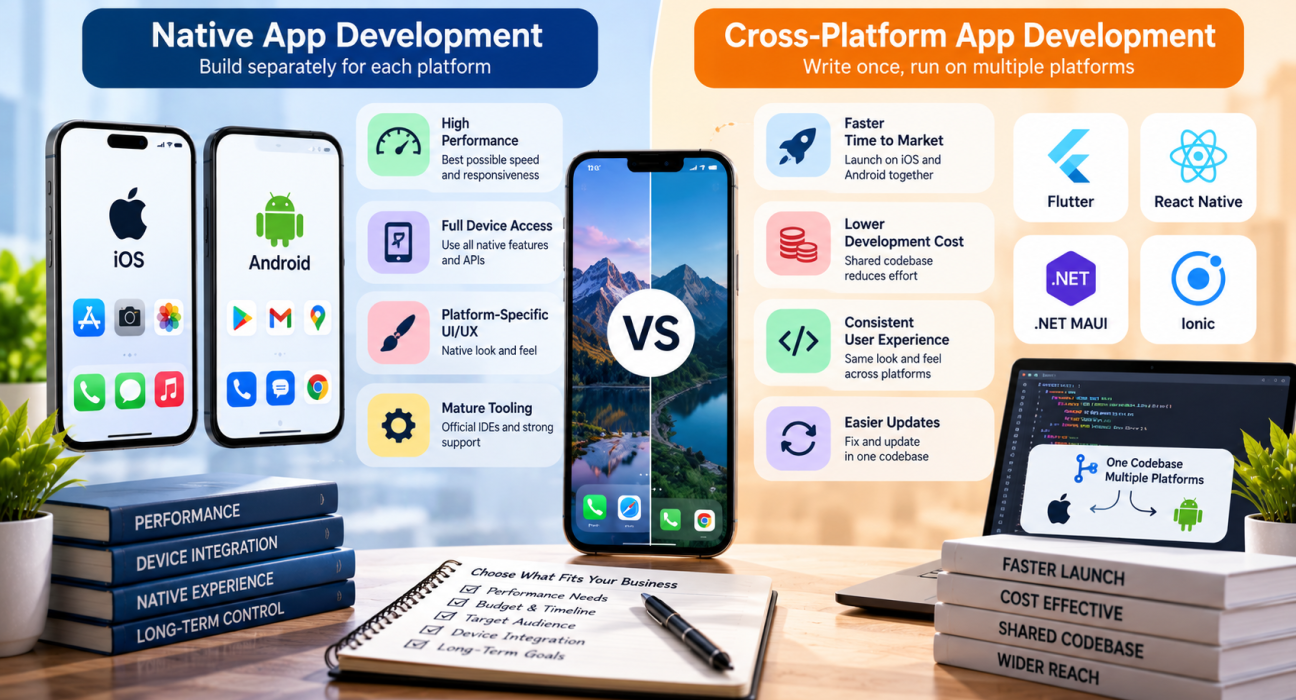
Short answer: Choose native development when performance, deep device integration, or a platform-specific experience is central to your product. Choose cross-platform when speed, budget, and reaching iOS and Android together matter more. Most startups and SMBs launching a first version are well served by cross-platform. Products that depend on heavy graphics, complex hardware access, or very polished platform behavior often justify native.
The debate over native vs cross-platform app development is not about which approach is “better.” It is about which one fits your product, budget, timeline, and team. This guide explains how each approach works, compares them side by side, and gives you a practical way to decide.
What Is Native App Development?
Native app development means building a separate app for each operating system using the languages and tools that platform provides.
- iOS: Swift or Objective-C, using Xcode
- Android: Kotlin or Java, using Android Studio
Each app is written specifically for its platform, so it has direct access to the device’s features, APIs, and design conventions. The trade-off is that you maintain two codebases, usually with two specialized teams.
What Is Cross-Platform App Development?
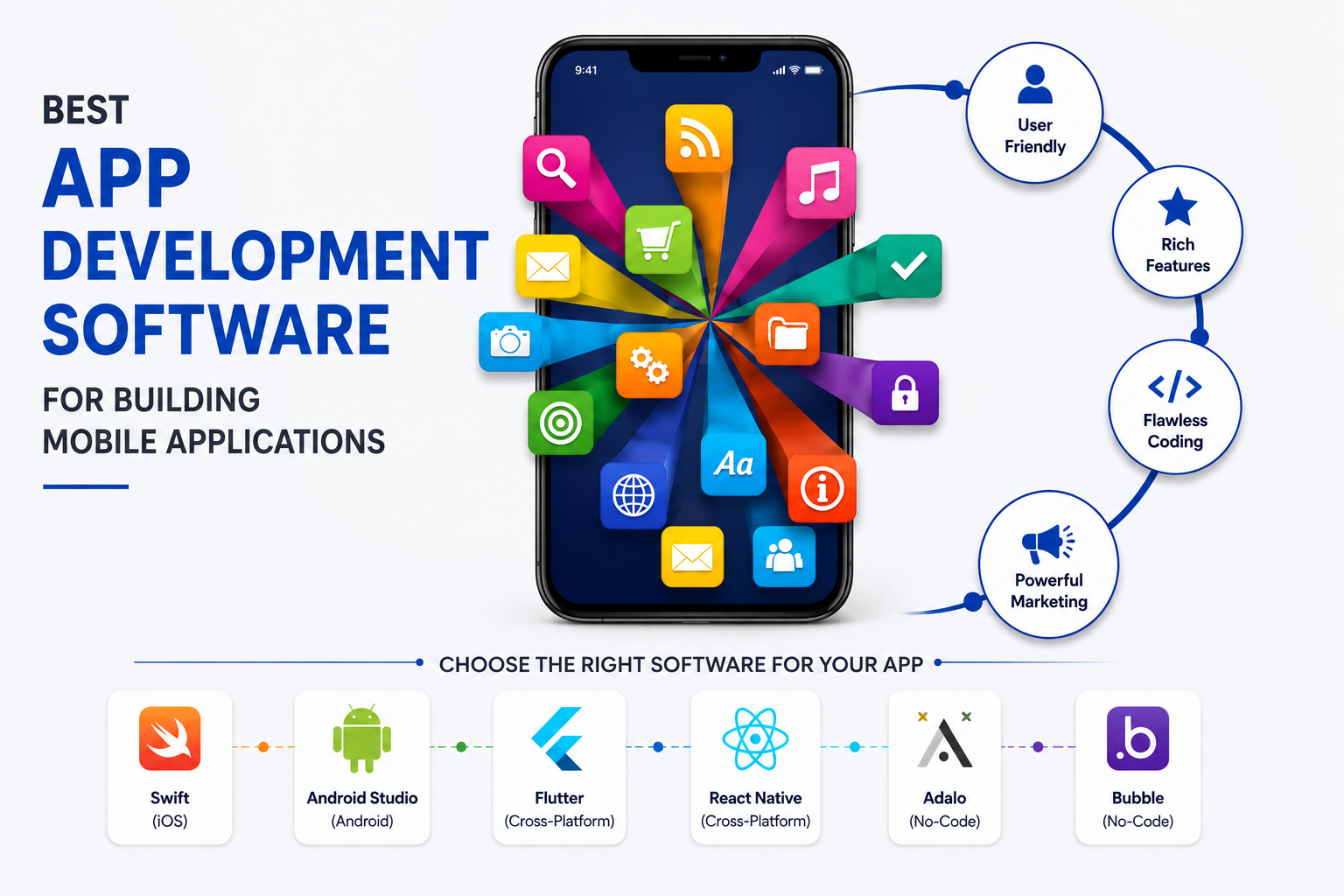
Cross-platform development lets you write most of your code once and run it on both iOS and Android. Popular frameworks include:
- Flutter: uses the Dart language and draws its own interface components
- React Native: uses JavaScript or TypeScript and renders native components
- Xamarin / .NET MAUI: uses C# within the Microsoft ecosystem
- Ionic and Capacitor: use web technologies wrapped in a native shell
The main appeal is a shared codebase. The main compromise is that you depend on the framework to support new platform features and to perform well.
Native vs Cross-Platform App Development: Side-by-Side Comparison
| Factor | Native | Cross-Platform |
|---|---|---|
| Codebase | Separate for iOS and Android | Mostly shared |
| Development speed | Slower, parallel builds | Faster for both platforms |
| Initial cost | Generally higher | Generally lower |
| Performance | Best possible | Good to very good for most apps |
| Device feature access | Immediate and complete | Often available, sometimes needs custom native code |
| UI/UX fidelity | Fully platform-specific | Very close, may need tuning |
| Maintenance | Two codebases to update | One main codebase, plus platform fixes |
| Talent | Specialized platform developers | Framework specialists |
| Best for | Complex, performance-critical apps | MVPs, content apps, business apps |
Treat the cost and speed rows as general tendencies. Actual numbers depend on scope, team, and region, so get quotes from several providers rather than relying on rules of thumb.
Pros and Cons of Native App Development
Advantages
- Top performance: Smooth animations, fast startup, and efficient use of memory and battery.
- Full access to device features: New OS capabilities, such as updated camera, sensor, or wearable APIs, are available the day they ship.
- Platform-native experience: Users get the navigation and behavior they already know.
- Mature tooling: Official IDEs, debuggers, and documentation.
Disadvantages
- Higher cost: You are effectively building two apps.
- Longer timelines: Features must be built and tested twice.
- Risk of inconsistency: The iOS and Android versions can drift apart in features and behavior.
Pros and Cons of Cross-Platform App Development
Advantages
- Faster time to market: One team can ship to both stores.
- Lower development effort: Shared logic and UI reduce duplicated work.
- Consistent brand experience: Both platforms look and behave similarly.
- Easier updates: Many fixes and features need to be written only once.
Disadvantages
- Performance ceiling: Very demanding apps can hit limits.
- Delayed access to new OS features: You may wait for framework support or write custom native modules.
- Framework dependency: Your roadmap is tied to the framework’s updates and community health.
- Platform quirks: Some behavior still needs platform-specific handling.
Which Is Better for Your Business: Native or Cross-Platform?
Neither wins in every case. Ask these questions in order.
1. How performance-intensive is your app?
If you are building a 3D game, real-time video tool, AR experience, or an app that processes large amounts of data on the device, native is usually the safer choice. For typical business apps, such as booking, e-commerce, dashboards, or content and social apps, modern cross-platform frameworks usually perform well enough that users will not notice.
2. Do you need deep hardware or OS integration?
Apps that rely on Bluetooth devices, advanced camera controls, background processing, or wearables may require significant native code anyway. If a large share of your features need custom native work, the savings from cross-platform shrink.
3. What is your budget and timeline?
If you need to validate an idea quickly, cross-platform lets you launch on both platforms with one team. If you have a larger budget and a longer horizon, native may give better long-term control.
4. Which platforms does your audience use?
If your users are heavily concentrated on one platform, a single native app may be the most efficient start. If your audience is split, cross-platform helps you reach everyone sooner.
5. How important is a platform-perfect user experience?
Brands that compete on polish and feel, such as premium consumer apps, often lean native. Many other products succeed with a consistent design that works well on both platforms.
6. What is your long-term plan?
Think about maintenance, hiring, and scale. A shared codebase is easier to maintain with a small team. Separate native codebases can be easier to optimize as the product and team grow.
When to Choose Native App Development
Native tends to be the right fit when:
- Performance and responsiveness are core to the product
- You need immediate access to the newest platform features
- The app depends heavily on hardware or sensors
- You are building for a single platform first
- You have the budget for dedicated iOS and Android teams
Example: A fitness app that syncs continuously with wearables and processes sensor data in the background is a strong native candidate.
When to Choose Cross-Platform App Development
Cross-platform tends to be the right fit when:
- You are building an MVP to test the market
- Budget and speed are priorities
- The app is mostly forms, lists, content, payments, and standard device features
- You want one consistent experience across platforms
- Your team is small
Example: A retail startup launching a catalog, cart, and order-tracking app on both iOS and Android can reach both audiences quickly with a shared codebase.
Can You Combine Both Approaches?
Yes. Many teams take a hybrid path: build most of the app with a cross-platform framework and write specific modules natively where performance or device access demands it. Another common path is to launch with cross-platform to validate demand, then move critical parts to native as the product matures. Plan for this early so your architecture does not lock you in.
Common Mistakes to Avoid
- Choosing a framework because it is popular: Match the technology to your requirements, not trends.
- Ignoring team skills: A framework your developers know well often beats a theoretically better one they do not.
- Underestimating maintenance: Both approaches need ongoing updates for OS releases, security, and bug fixes.
- Skipping a prototype: For uncertain cases, a small proof of concept can reveal performance or integration problems cheaply.
- Treating cost as the only factor: The cheapest build can become expensive if it cannot support your roadmap.
How to Choose the Right Development Partner
Once you know your direction, the next step is finding a team with real experience in it. When comparing mobile app development companies, look for:
- Relevant portfolio work in your chosen approach (native iOS, native Android, Flutter, React Native, and so on)
- Experience in your industry or with similar app types
- Clear communication, process, and project management
- A defined approach to testing, security, and post-launch support
- Transparent estimates that explain what drives cost
Platforms like GoFirms let businesses research and compare technology and mobile app development companies, so you can shortlist providers by services and expertise before reaching out. Always verify details directly with providers and check their references.
[Internal Link Suggestion: Relevant GoFirms Page/Article on mobile app development companies]
Frequently Asked Questions
What is the main difference between native and cross-platform app development?
Native development builds separate apps for iOS and Android using each platform’s own languages and tools. Cross-platform development uses one shared codebase, built with a framework like Flutter or React Native, to run on both. Native offers maximum performance and device access, while cross-platform offers faster delivery and lower effort.
Is cross-platform app development cheaper than native?
Often, yes, because one team builds most of the app once instead of twice. However, savings depend on app complexity. If you need many custom native modules, the cost gap narrows. Compare detailed quotes from multiple providers to understand the real difference for your project.
Is native app development faster or slower than cross-platform?
Native is usually slower overall because iOS and Android are built separately, although two teams can work in parallel. Cross-platform is typically faster to launch on both platforms since much of the code is shared. Timelines still depend on scope, design complexity, and integrations.
Which approach is better for startups?
Most startups benefit from cross-platform for a first version because it reduces cost and speeds up validation. If the core product depends on high performance or advanced hardware features, native may be worth the investment from the start. Your product requirements should decide.
Does cross-platform performance match native apps?
For most business and consumer apps, modern frameworks deliver performance that users cannot distinguish from native. Graphics-heavy, real-time, or highly optimized apps may still run better as native. A prototype can show whether your specific use case performs well enough.
Can I switch from cross-platform to native later?
Yes, but it usually means rebuilding some or all of the app. Plan for modular architecture, keep business logic separate from the interface, and document APIs clearly. This makes a gradual move to native, or a hybrid setup, much easier if your needs change.
How do I choose between Flutter, React Native, and native?
Start with your requirements: performance needs, required device features, team skills, and timeline. Then evaluate each option against them. Building a small prototype and speaking with experienced development companies can help confirm the right fit before you commit.
Conclusion
The native vs cross-platform app development decision comes down to your product’s needs. Native gives you the best performance, full device access, and a truly platform-specific feel, at a higher cost and longer timeline. Cross-platform gives you speed, shared code, and lower effort, with some limits on performance and access to new platform features. Define your must-have features, audience, budget, and long-term plans first, and the right choice usually becomes clear.
When you are ready to move forward, you can use GoFirms to research and compare mobile app development companies that match your chosen approach, then validate your shortlist through portfolios, references, and detailed proposals.